




























Bauhaus prints and early abstract art
The Bauhaus was a German school of art, design and architecture. Walter Gropius founded it in Weimar in 1919. It moved to Dessau in 1925 and to Berlin in 1932, and it closed in 1933 under Nazi pressure. Its teachers wanted to join fine art, craft and industry. Clean geometry and strong primary colors became its visual signature.
Who taught at the Bauhaus
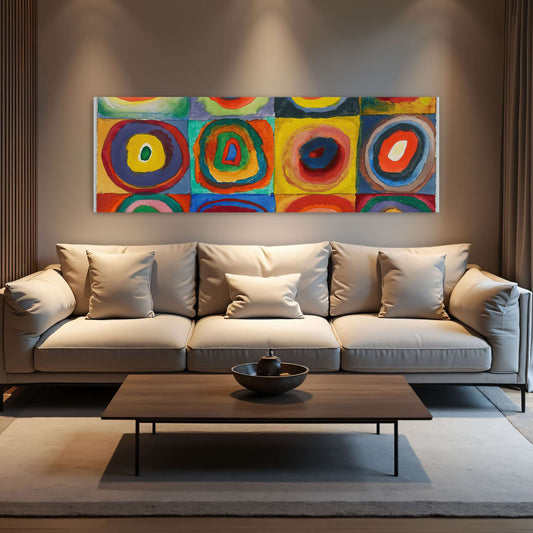
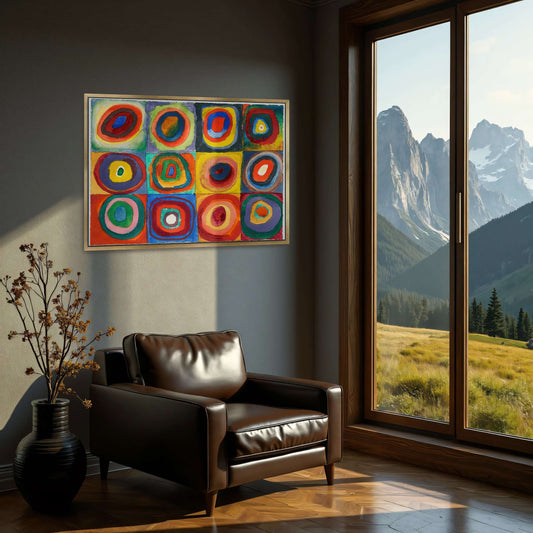
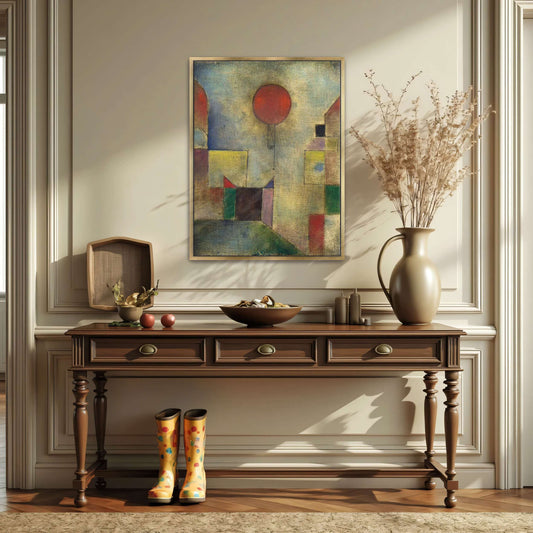
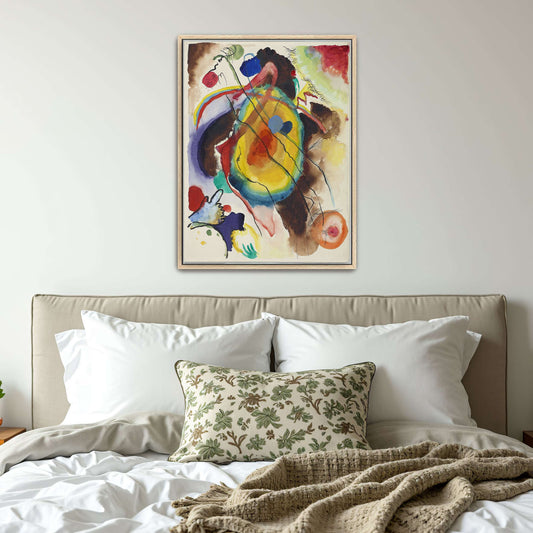
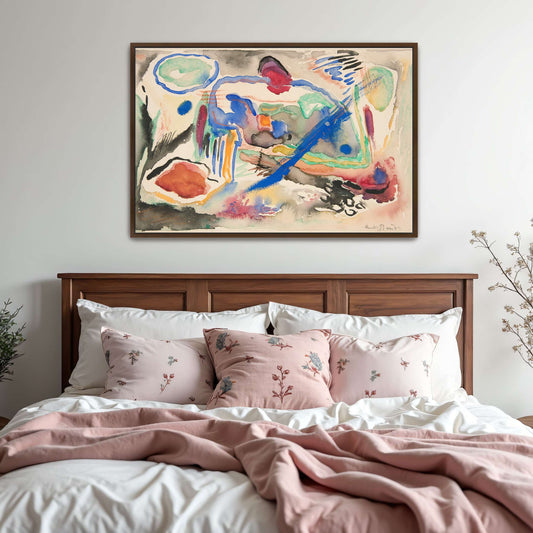
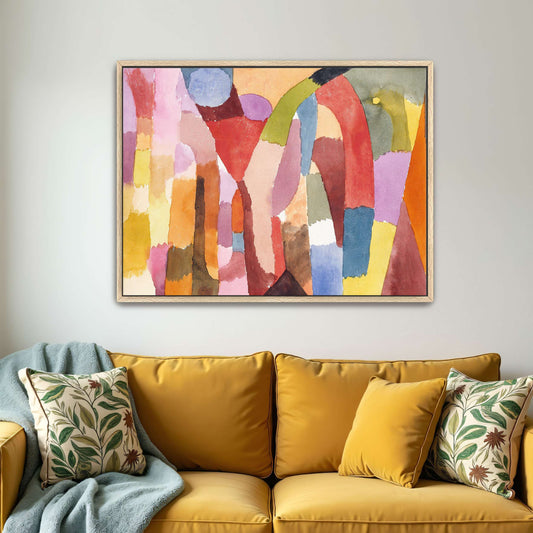
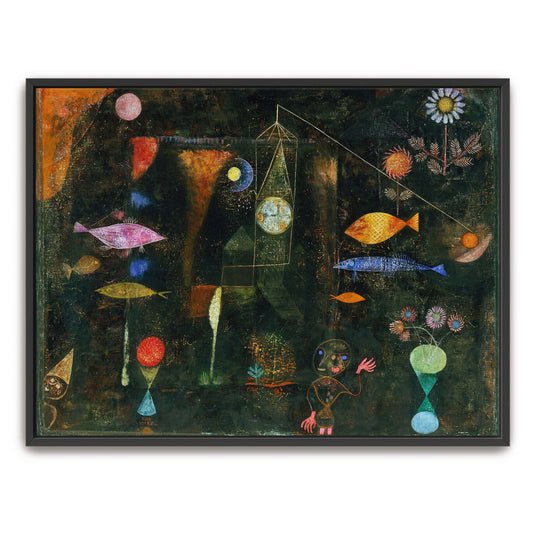
Paul Klee taught at the Bauhaus from 1921 to 1931. His works here include Red Balloon (1922), May Picture (1925) and Polyphonic Architecture (1930). Wassily Kandinsky taught there from 1922 until the school closed in 1933. His Lithograph Blue, The Boat dates from his first Bauhaus year. Squares with Concentric Circles (1913) is earlier, from his Munich years. See more in Paul Klee Prints and Wassily Kandinsky Prints.
Who worked beside it
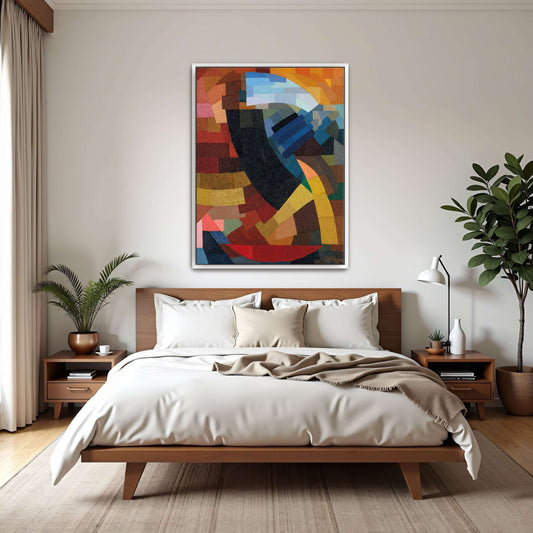
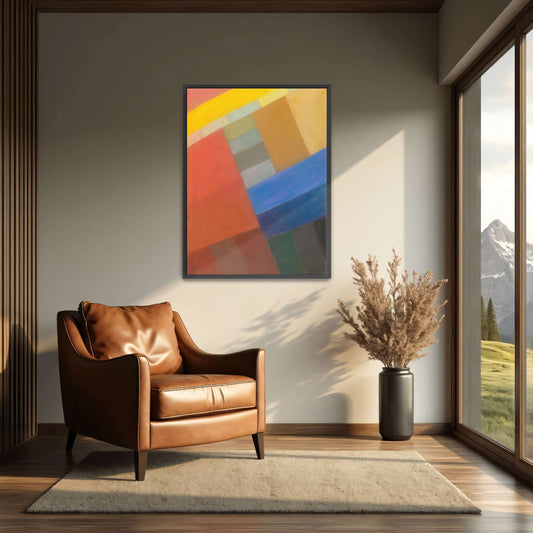
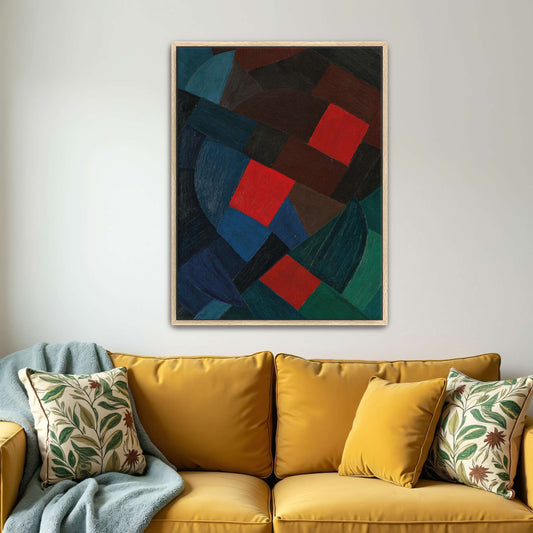
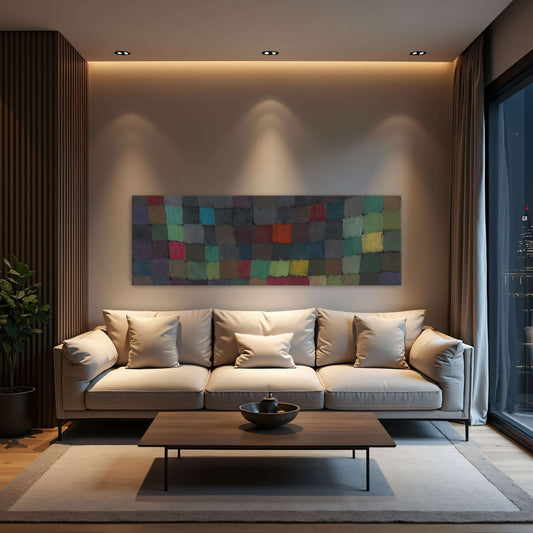
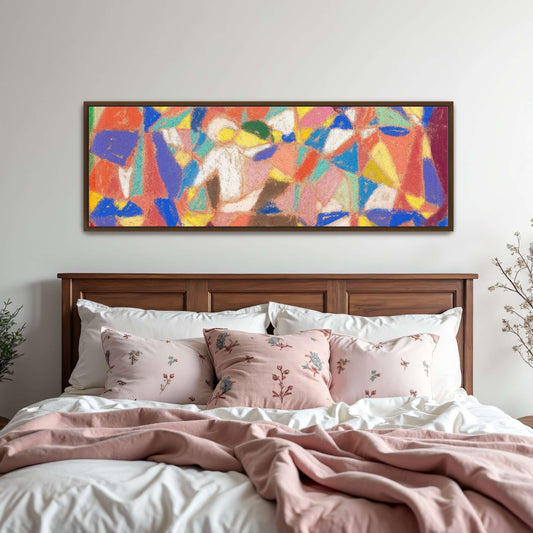
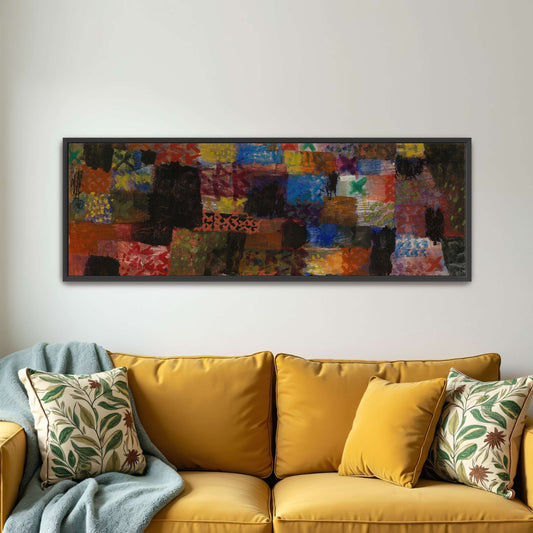
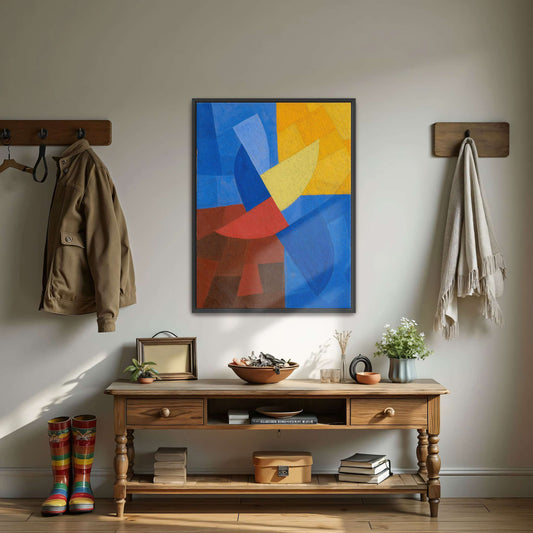
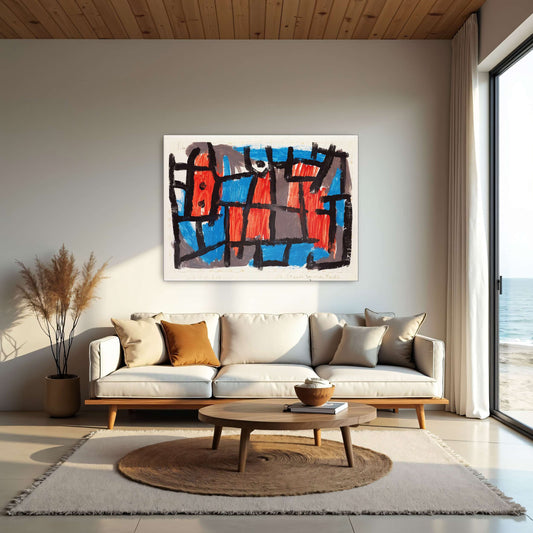
Adolf Hölzel never taught at the Bauhaus, but his color teaching in Stuttgart reached it. Johannes Itten and Oskar Schlemmer studied with him and later became Bauhaus masters. His Glasfensterentwurf (1932) is a design for a stained glass window. Otto Freundlich, a German painter and sculptor, worked mostly in Paris. He built his pictures from blocks of color, as in My Sky Is Red (1933). The Nazis attacked his work, and he was murdered in the Holocaust in 1943. Rudolf Bauer showed with the Der Sturm gallery in Berlin. His Third Symphony in 3 Movements (1930 to 1934) is built from circles and bars of color.
Bringing Bauhaus art home
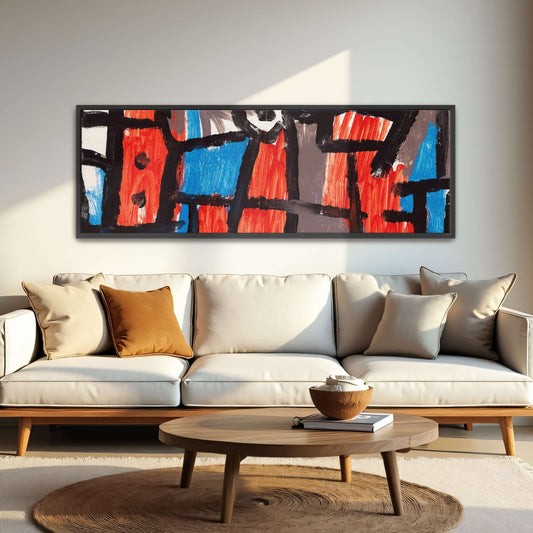
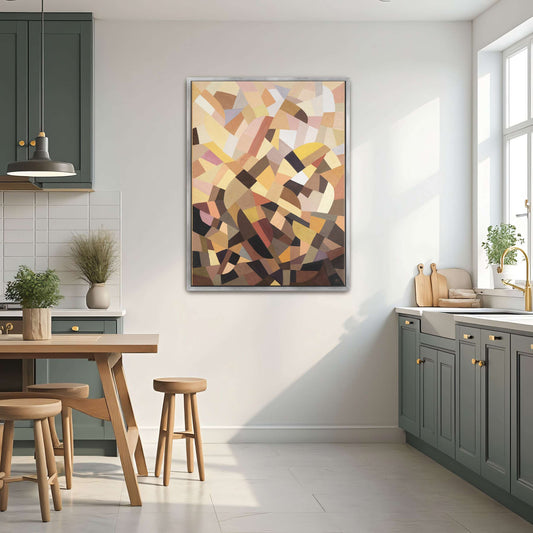
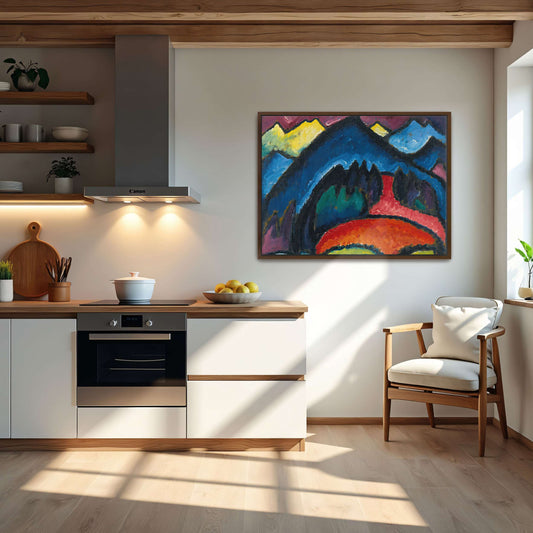
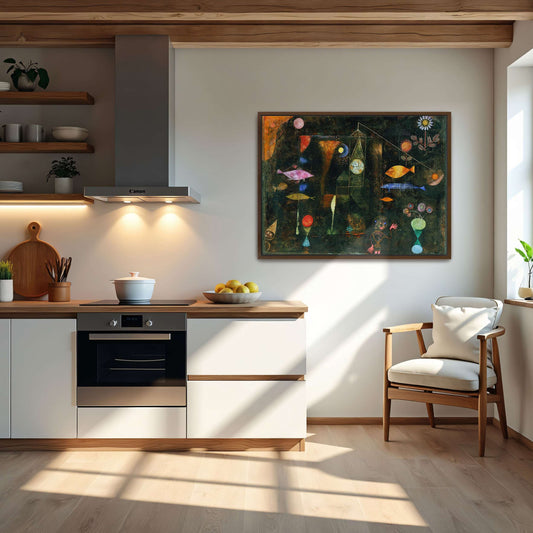
Bauhaus and early abstract art suits modern rooms, white walls and simple furniture. One strong geometric print can anchor an office or a living room. Two or three prints by different artists hang well together, because they share circles, grids and flat color. Black or white frames keep the look clean. Oak suits Scandinavian and mid-century rooms. Klee's Red Balloon suits a child's room or a reading corner. Freundlich's blocks of color work above a long desk or a low sideboard.
Sizes, formats and prices
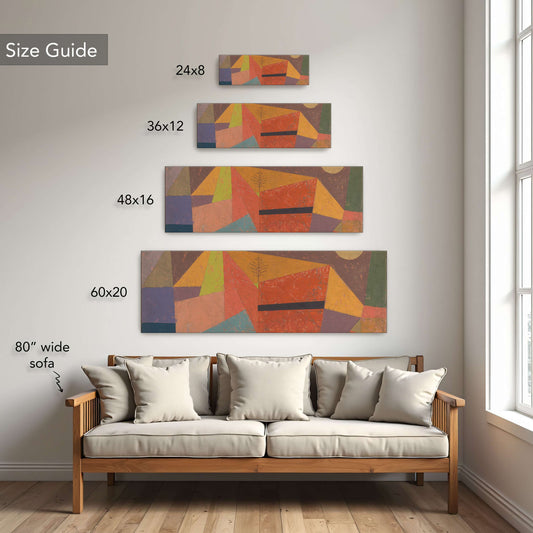
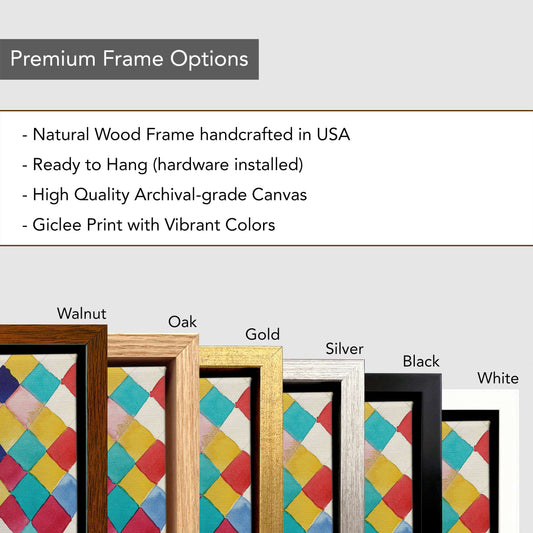
Sizes run from 8 × 12 to 28 × 42 inches, or from 11 × 14 to 30 × 40 inches. The range depends on the shape of the work. Fine art paper starts at $30, gallery-wrapped canvas at $50 and framed canvas at $90. Frames come in black, white, gold, silver, walnut and oak. The paper is 340gsm, 100% cotton rag, and ships rolled in a tube. The canvas is acid-free, with giclée printing rated for more than 100 years of fade resistance. Some works also come as 3:1 panoramic prints, from 8 × 24 to 20 × 60 inches, starting at $90.
Related collections
For more abstract work from the same years, see Abstract Wall Art. Kandinsky's friend from Munich has his own page, Alexej von Jawlensky Prints.