


























Art Nouveau prints from Vienna
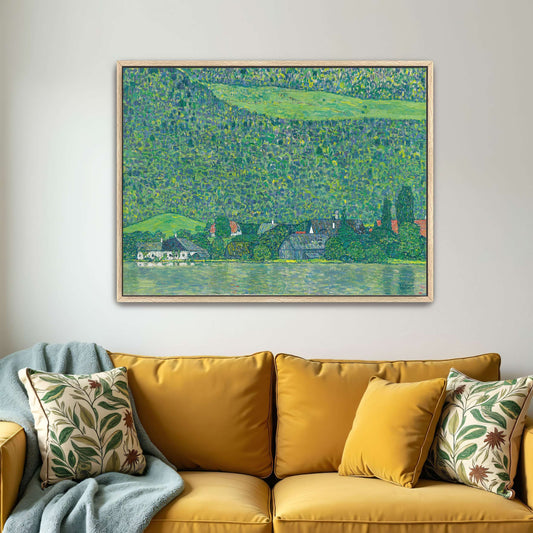
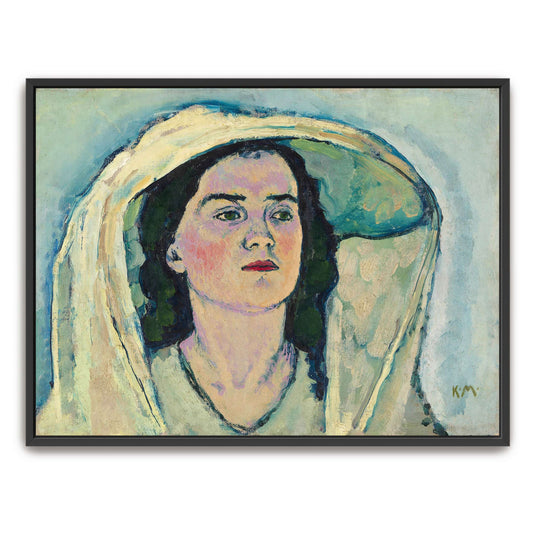
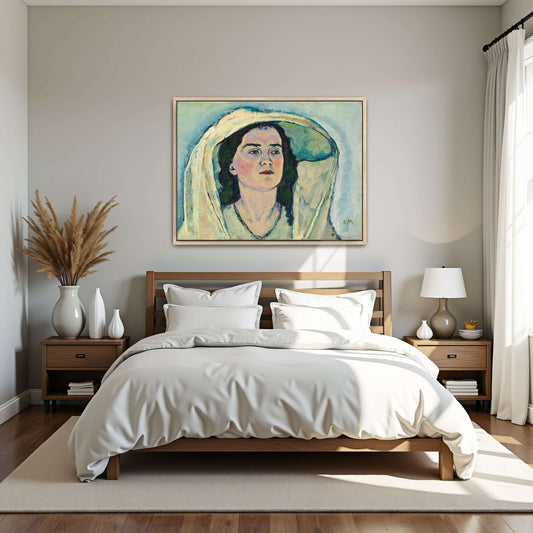
Our Art Nouveau prints focus on one city and one group. Klimt, Moll and Moser all helped found the Vienna Secession in 1897. Together they shaped Viennese painting and design in the years around 1900. This collection gathers their paintings as canvas and paper prints.
What Art Nouveau is
Art Nouveau was an international style of about 1890 to 1910. It used flowing lines, plant forms and flat decorative pattern. It shaped painting, posters, buildings and furniture. In Germany it was called Jugendstil. In Austria it was often called Secession style, after the Vienna group.
Vienna Secession art
In 1897 a group of artists left Vienna's established artists' association and founded the Secession. Klimt was its first president. In 1898 they opened their own exhibition hall, designed by Joseph Maria Olbrich. Over its door is the motto “To every age its art, to art its freedom.” The group also published a magazine, Ver Sacrum.
Koloman Moser was a designer as much as a painter. In 1903 he and the architect Josef Hoffmann founded the Wiener Werkstätte, a workshop for furniture, glass, silver and textiles. Carl Moll organized exhibitions and painted interiors, gardens and city views. In 1905 all three left the Secession with other members of the Klimt group.
The Secession's exhibition posters are famous, but this collection has paintings, not posters. For a Vienna Secession poster look, choose unframed fine art paper and your own frame.
Works in this collection
- Gustav Klimt, The Kiss (1908): a couple wrapped in gold on a flower meadow.
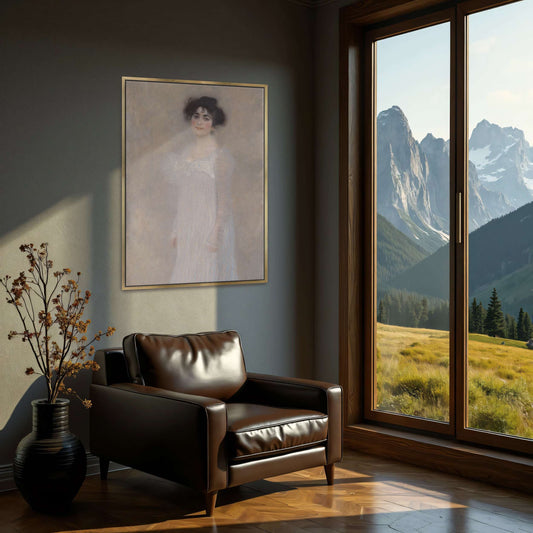
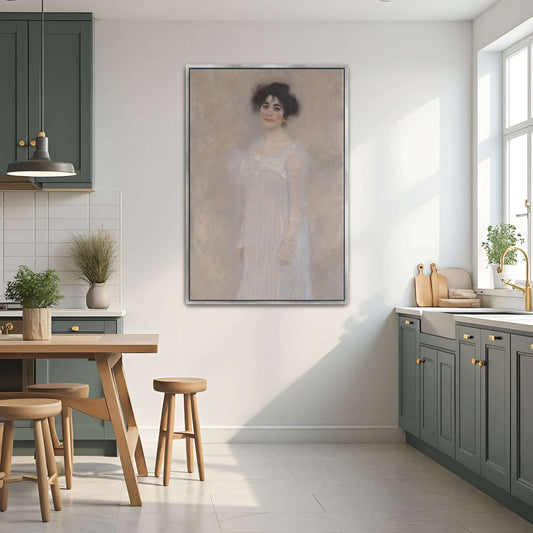
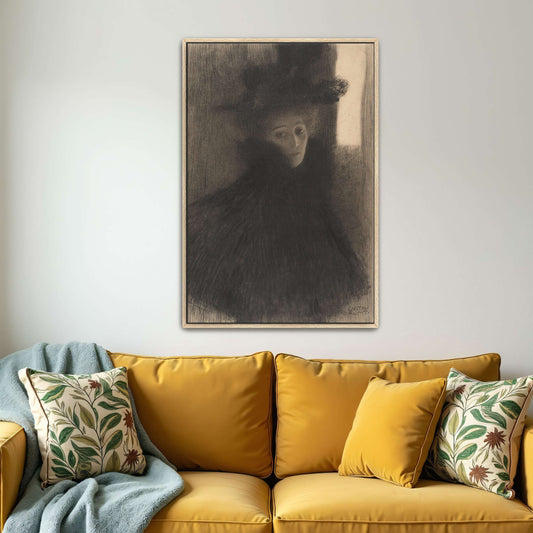
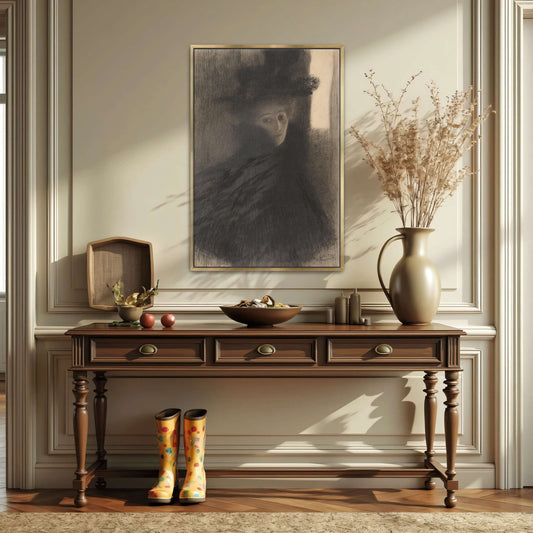
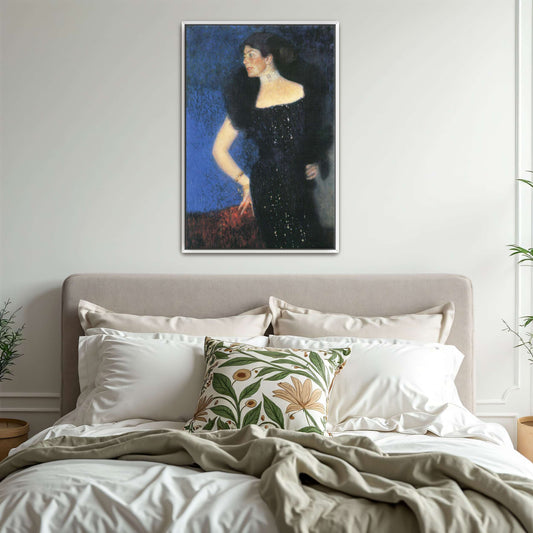
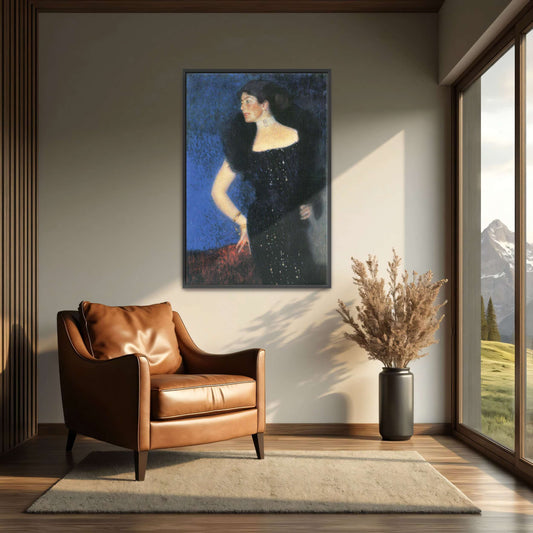
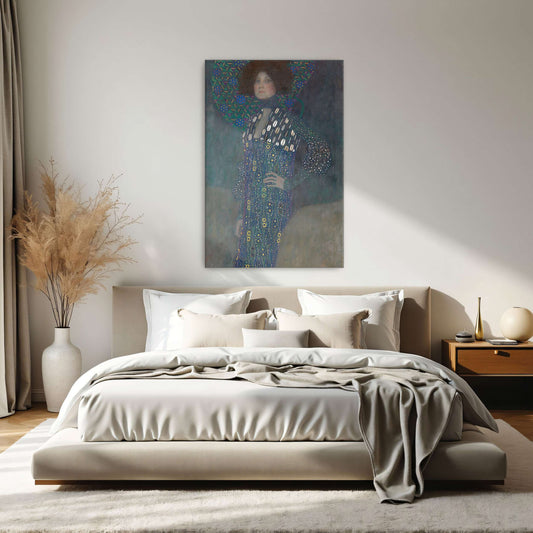
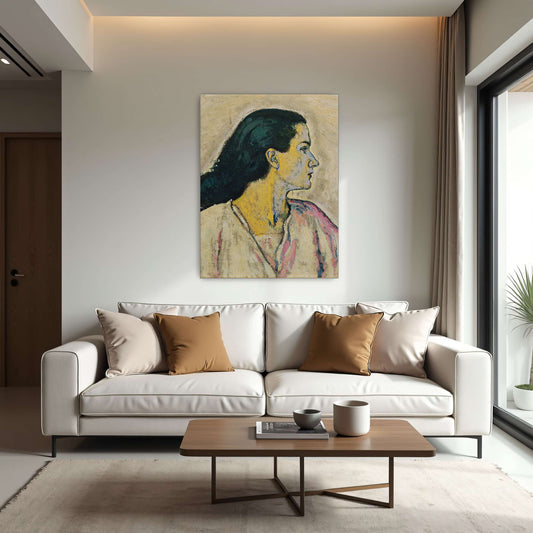
- Gustav Klimt, Portrait of Eugenia Primavesi (1913): a patron in a flowered dress on a bright ground.
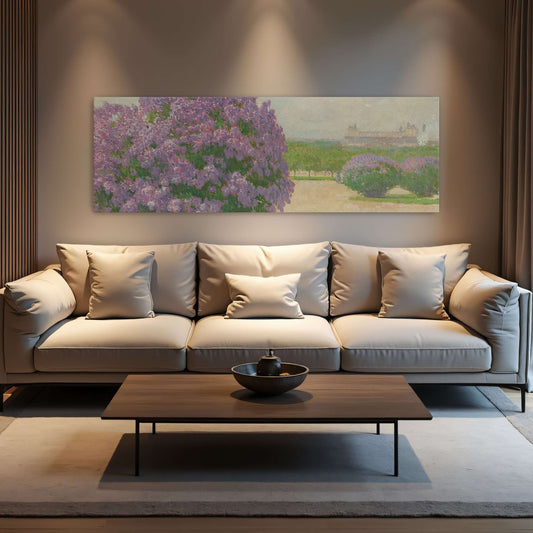
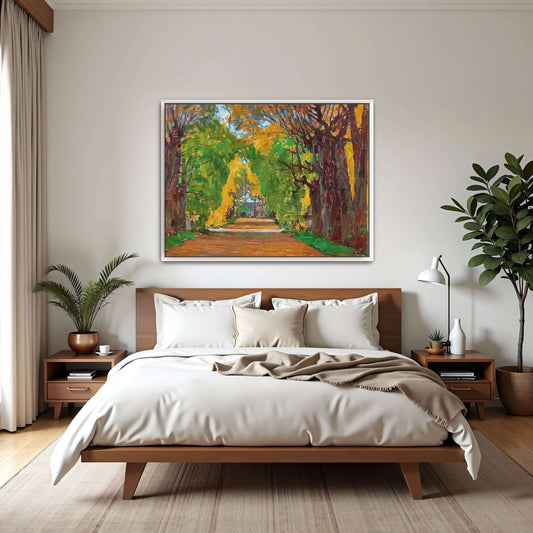
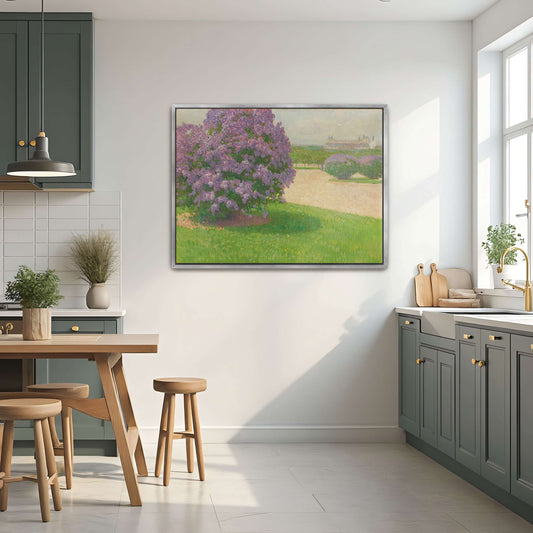
- Carl Moll, Heldenplatz mit Flieder (1900): lilac in bloom on a Vienna square.
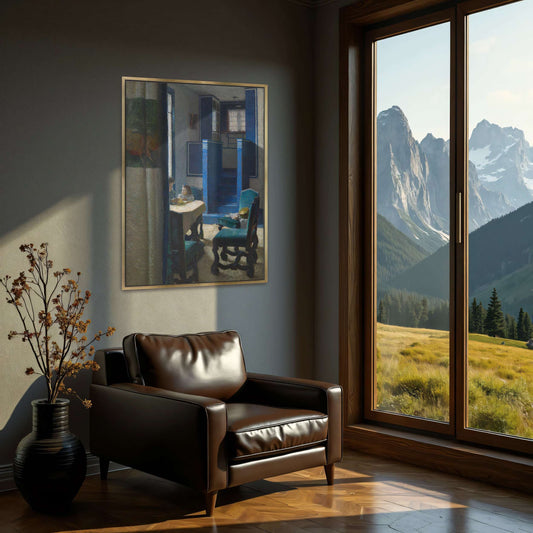
- Carl Moll, Salon im Haus auf der Hohen Warte (1903): a bright salon in a house on the Hohe Warte in Vienna.
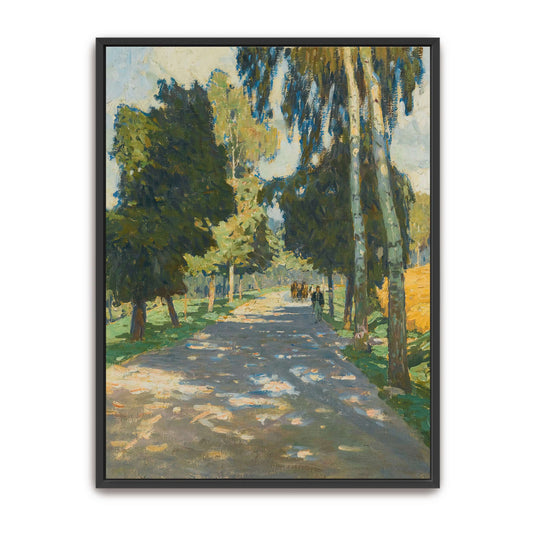
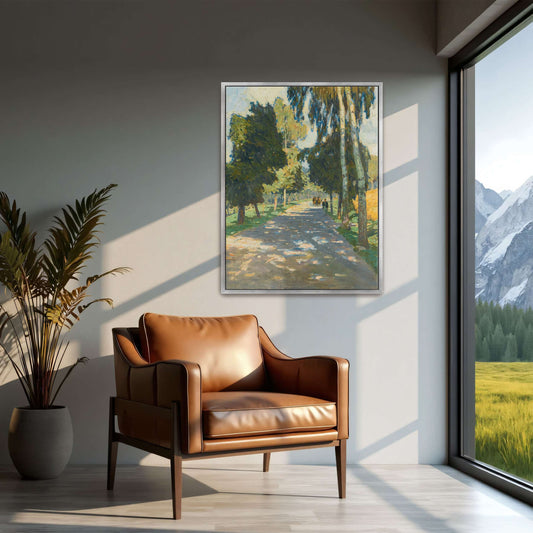
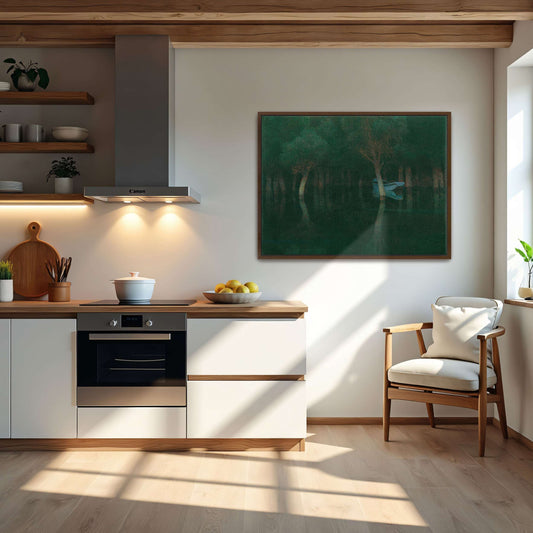
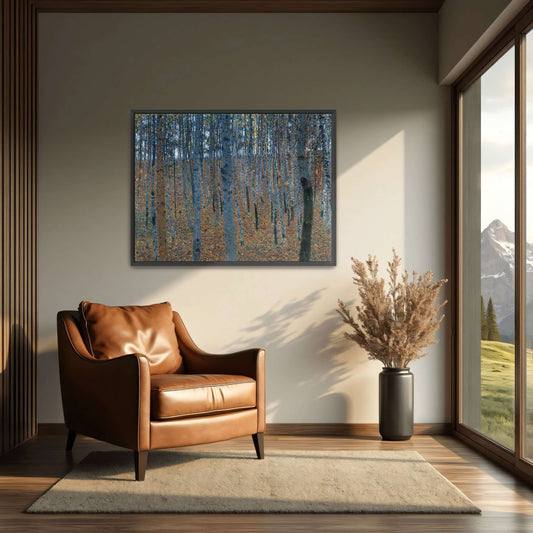
- Carl Moll, Birkenwäldchen im Abendlicht (1902): a birch grove in evening light.
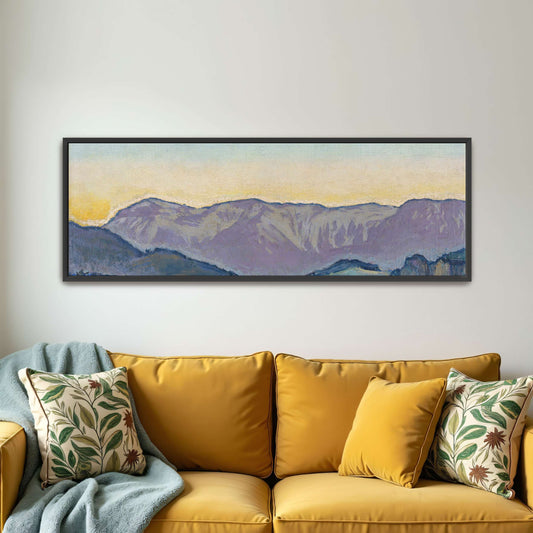
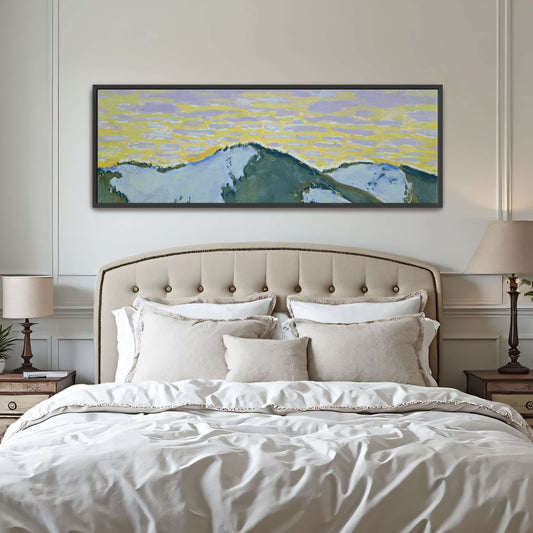
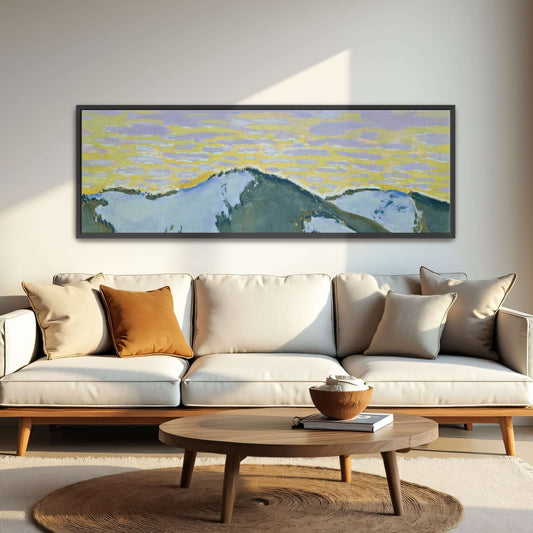
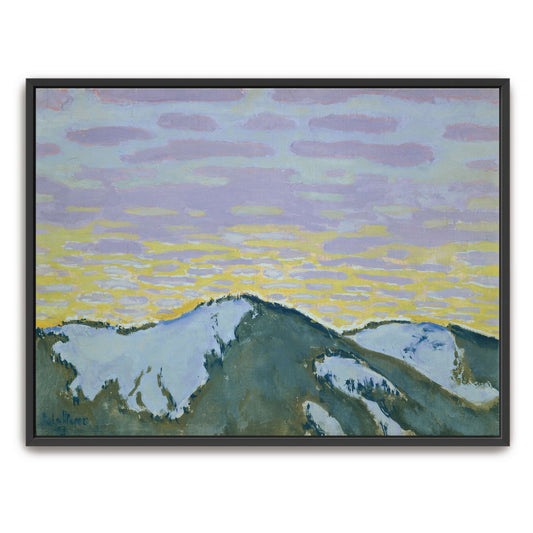
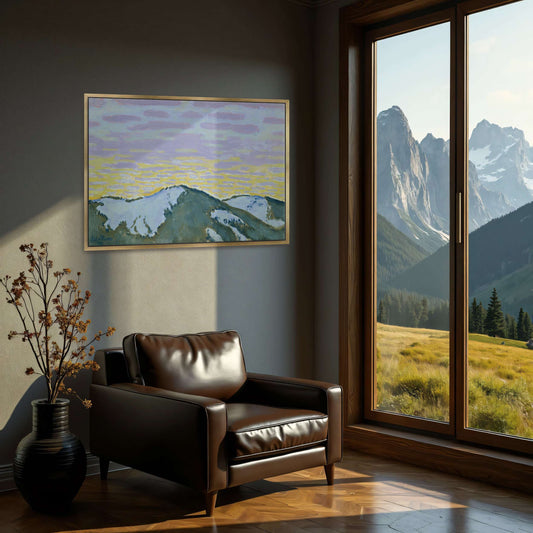
- Koloman Moser, Verschneite Berggipfel in der Dämmerung (1913): snowy peaks at dusk, as a long panoramic print.
- Koloman Moser, Wolkenstudie (1913): a cloud study that comes close to abstract painting.
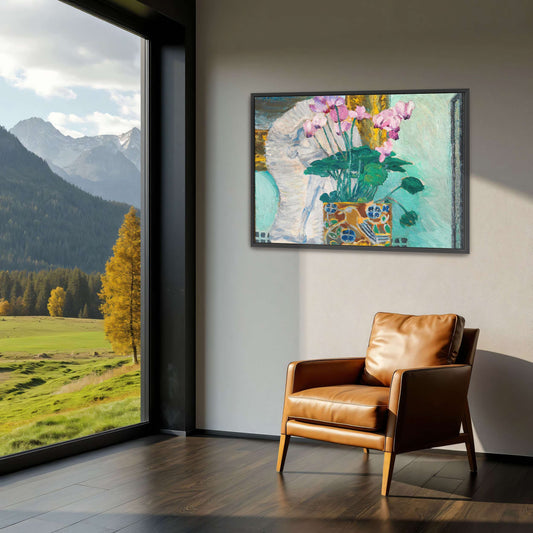
- Koloman Moser, Blumenstilleben mit Zyklamenstock (1907): a pink cyclamen in a patterned pot.
Sizes and frames
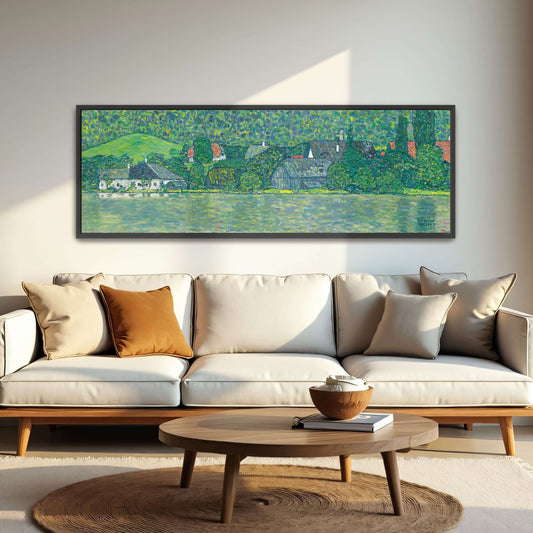
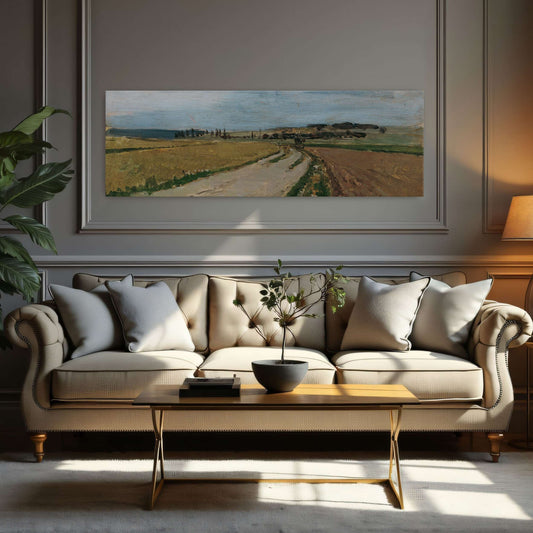
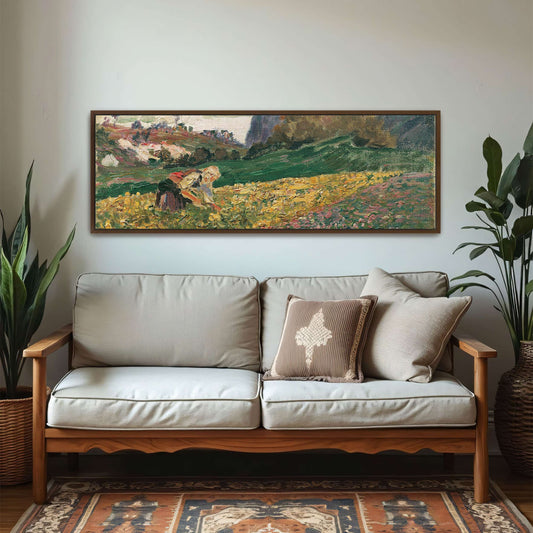
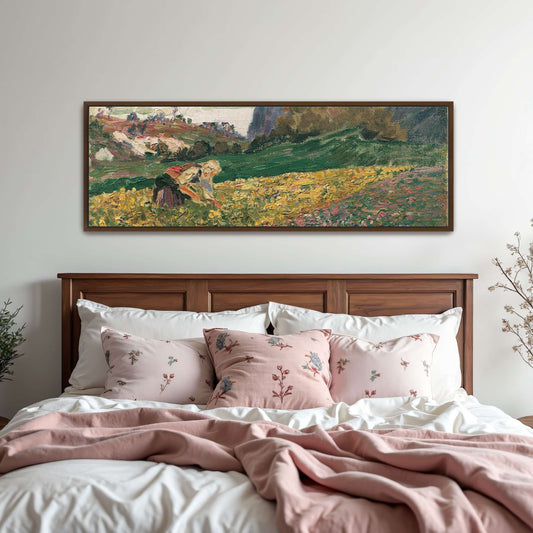
Standard prints run from 8 × 12 to 28 × 42 inches, or from 11 × 14 to 30 × 40 inches. The range depends on the shape of the painting. Each product page shows the current price for every size and format. Frames come in black, white, gold, silver, walnut and oak. Several landscapes and The Maiden also come as panoramic prints, 8 × 24 to 20 × 60 inches. Panoramic framed canvas comes in black, walnut or oak.
Decorating with Art Nouveau wall art
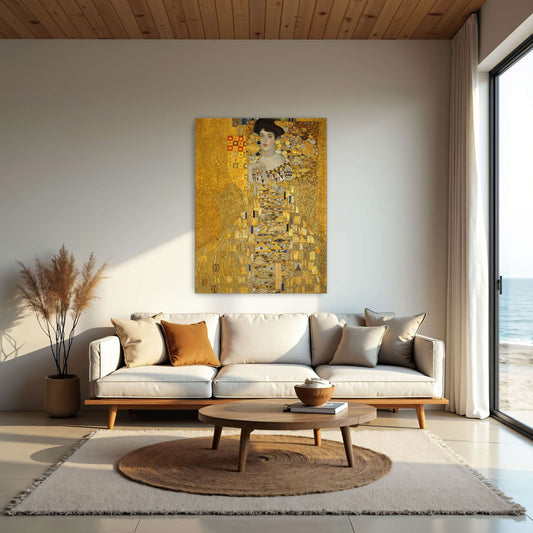
Art Nouveau wall art suits rooms with clean lines and some pattern: a bentwood chair, a geometric rug, a brass lamp. Gold frames fit Klimt's portraits. Black or walnut frames echo the dark lines of Viennese design. A pair of Moser's mountain views works above a sofa or bed.
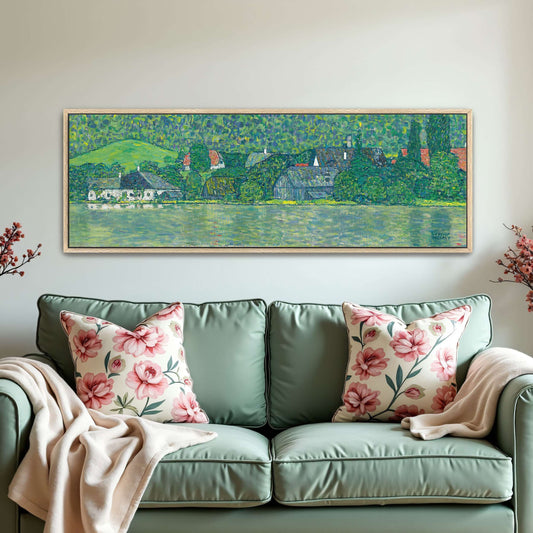
For Klimt alone, see Gustav Klimt Prints. The portraits also appear in Vintage Portrait Paintings, and the gardens in Vintage Floral Prints. For the lake and mountain views in long formats, see Panoramic Landscape Wall Art.