











Paul Klee prints in this collection
These Paul Klee prints cover 25 years of his work, from 1915 to his last year, 1940. Most are abstract or half abstract. Colors are clear and warm, and shapes are simple: squares, grids, a sun, a balloon, fish and flowers. Each painting is in the public domain, and each print is made to order.
About Paul Klee
Paul Klee was born in 1879 in Münchenbuchsee, near Bern in Switzerland. His father taught music, and Klee was a skilled violinist. He studied art in Munich and settled there. Before World War I he joined the circle of the Blue Rider, with Wassily Kandinsky and Franz Marc.
In 1914 Klee traveled to Tunisia with the painters August Macke and Louis Moilliet. The strong light there changed his work. Afterward he wrote that color and he were one. From 1921 to 1931 he taught at the Bauhaus, first in Weimar and then in Dessau.
In 1931 he moved to the Düsseldorf Academy. The Nazis dismissed him in 1933, and he returned to Bern. He fell ill in 1935 but kept working. He died in 1940 in Muralto, near Locarno.
For the story behind each work, read our guide to Paul Klee's most famous paintings.
Klee works to start with
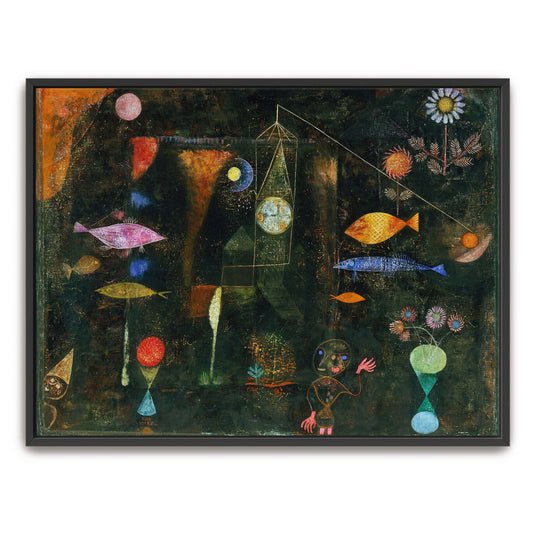
- Fish Magic (1925): fish, flowers and a clock floating in a dark night.
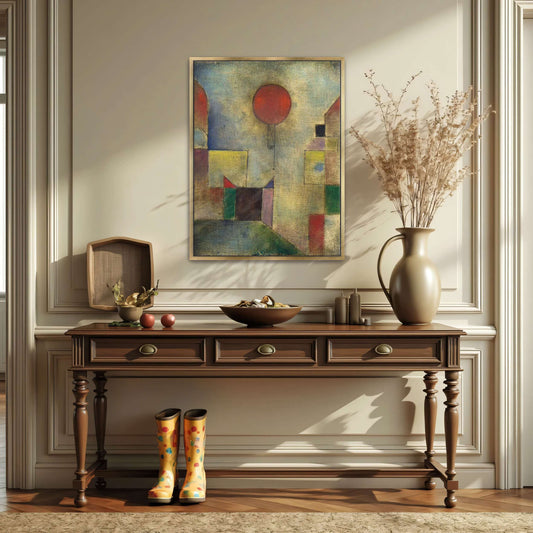
- Red Balloon (1922): a red balloon rising over a town of colored blocks.
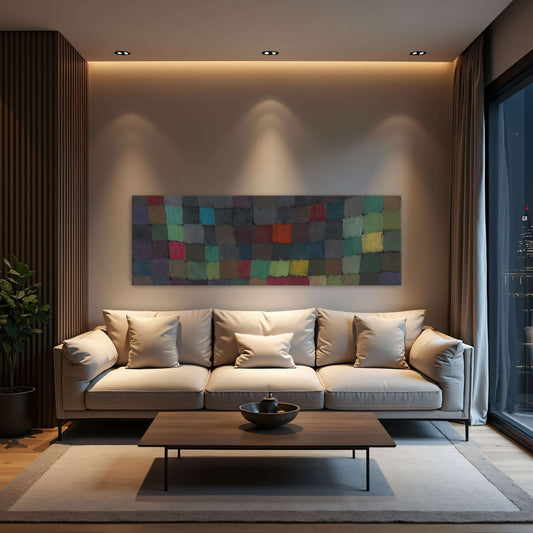
- May Picture (1925): a grid of small squares in spring colors.
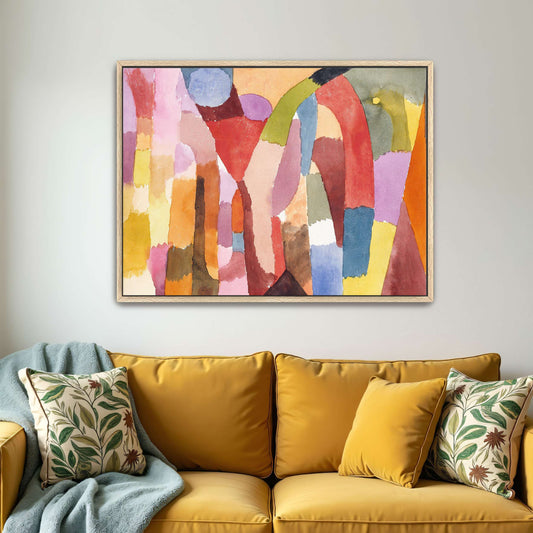
- Polyphonic Architecture (1930): layered bands of color that build a city.
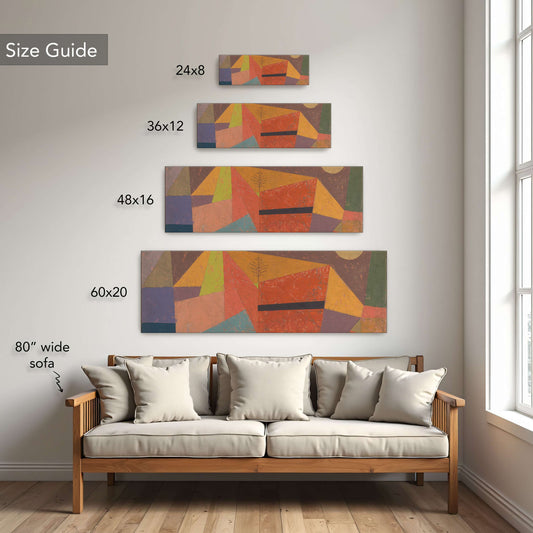
- Joyful Mountain Landscape (1929): a sun and a tree over stacked hills, here as a panoramic print.
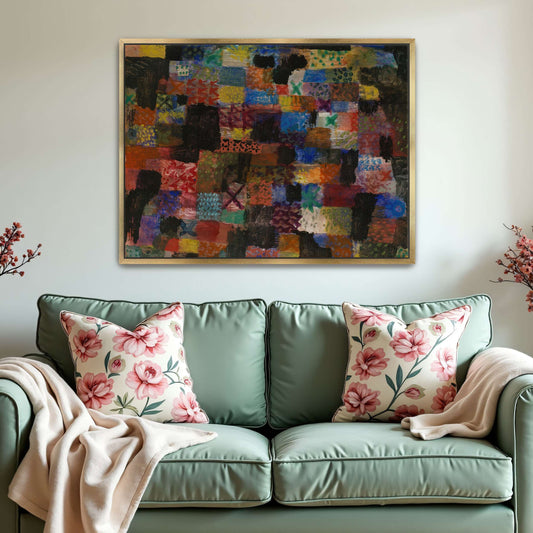
- Black Columns in a Landscape (1919): dark upright shapes in a field of colored planes.
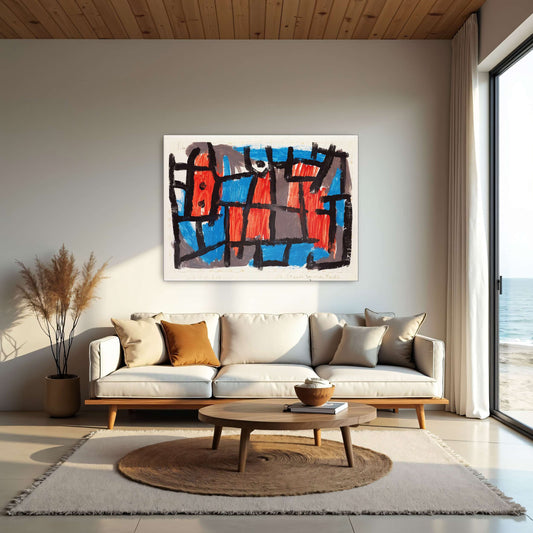
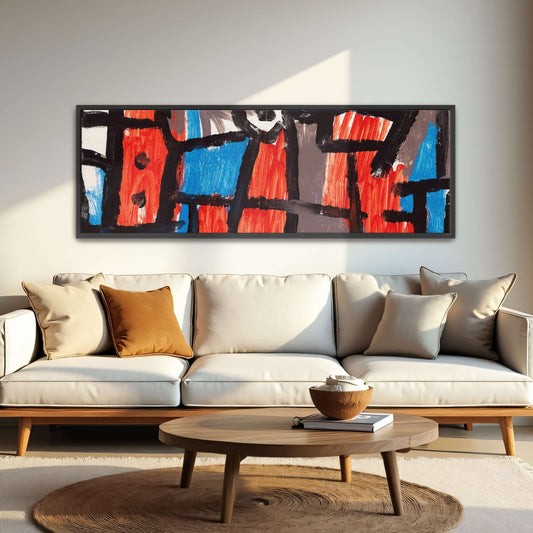
- The Hour Before One Night (1940): red, blue and gray shapes from his last year.
Sizes and frames
Standard prints come in five sizes, from 11 × 14 to 30 × 40 inches. Each product page shows the current price for every size and format. Frames come in black, white, gold, silver, walnut and oak.
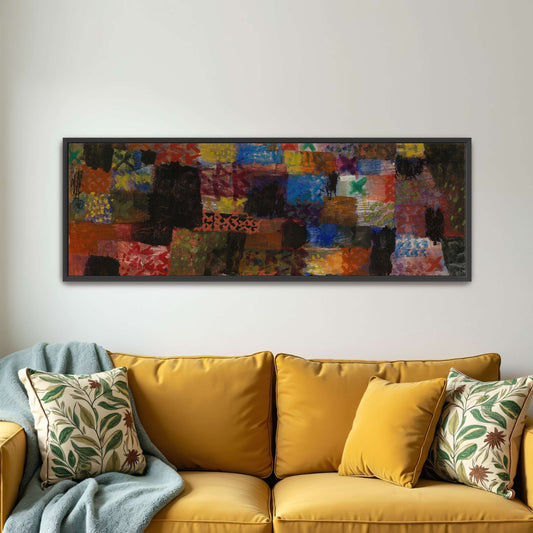
Five prints are panoramic, from 8 × 24 to 20 × 60 inches. Panoramic framed canvas comes in black, walnut or oak. For a Paul Klee poster, choose fine art paper and your own frame. It is 340gsm, 100% cotton rag, and ships rolled in a tube.
Where Klee's work fits in a home
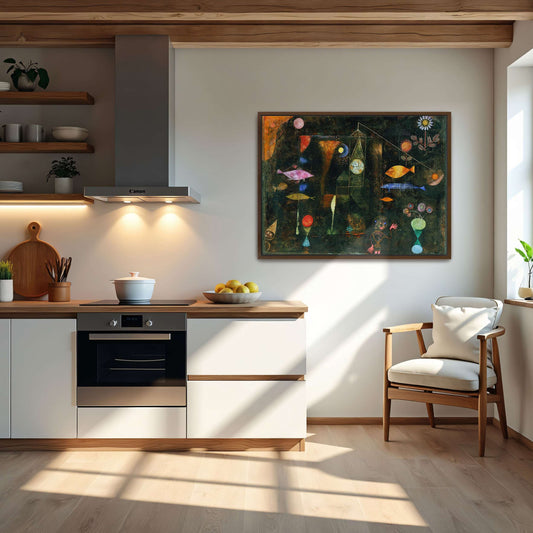
Klee's bright grids suit modern rooms, studios, home offices and children's rooms. His night scenes, such as Fish Magic, suit a darker wall in a den or bedroom. A panoramic print fits above a sofa, desk or bed. Black or white frames keep the focus on his color.
Klee and Kandinsky were colleagues at the Bauhaus, and their work sits well together. See Wassily Kandinsky Prints and Bauhaus & Early Abstract Art Prints. For long formats, see Panoramic & Horizontal Wall Art and Wall Art Above Couch.