
























Impressionist prints and wall art
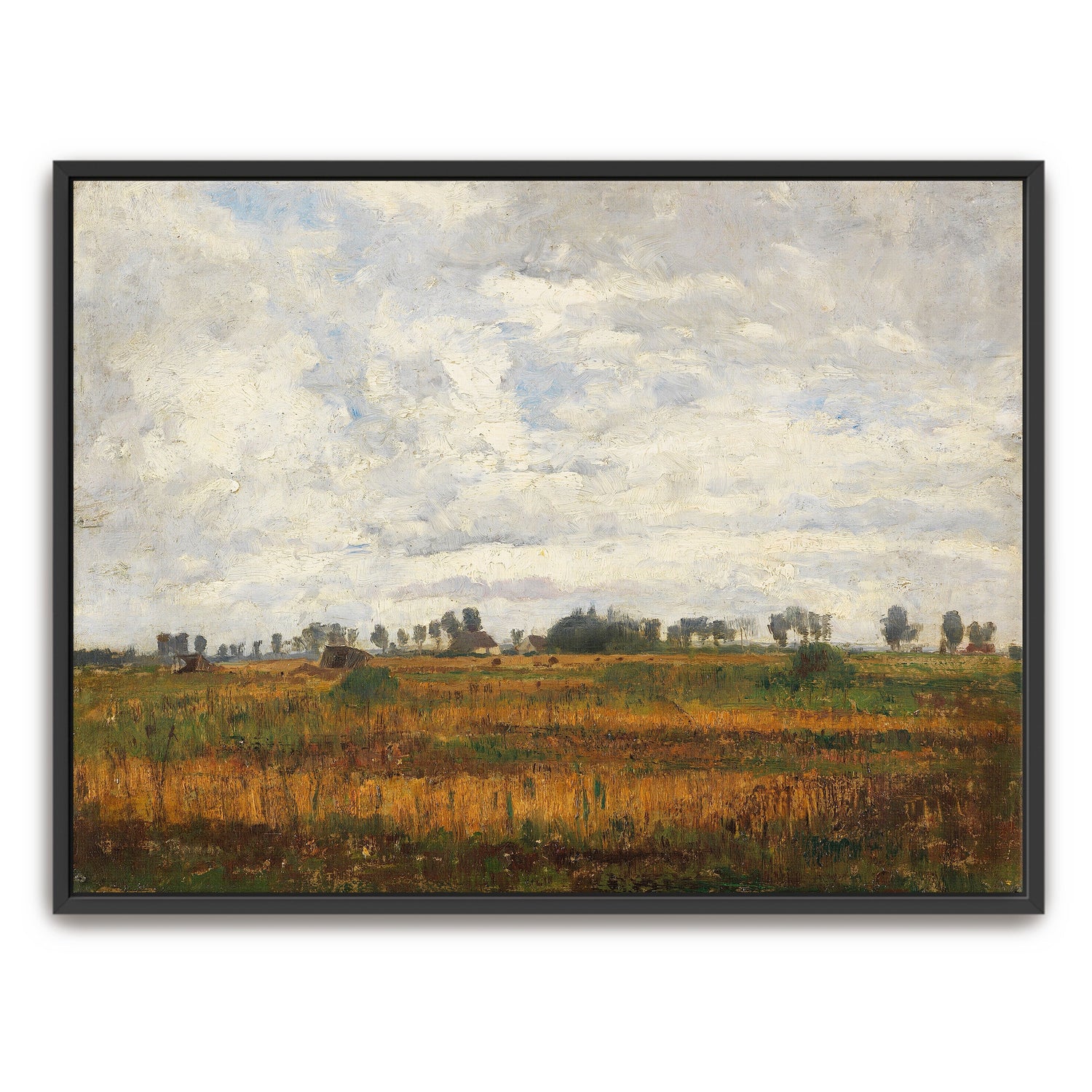
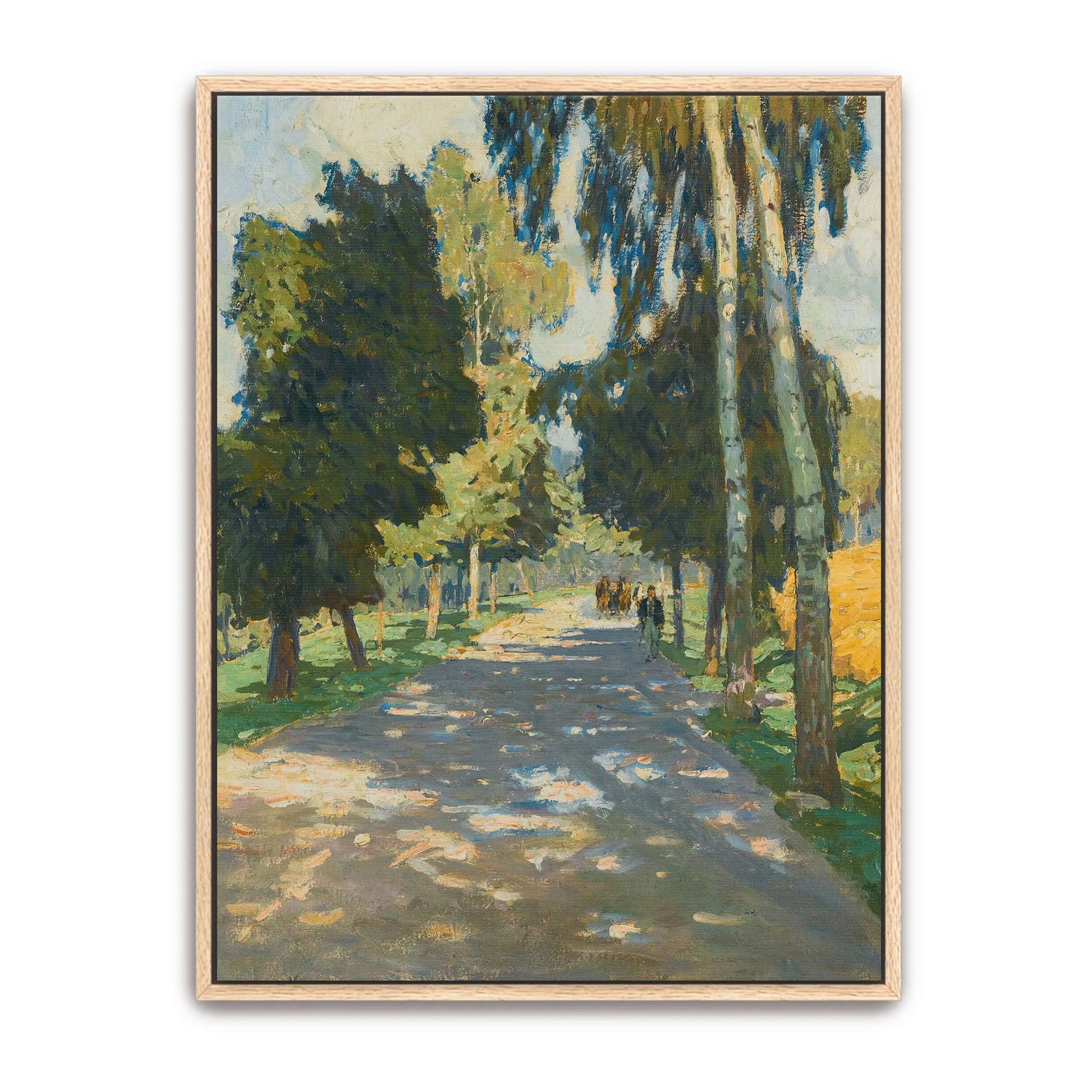
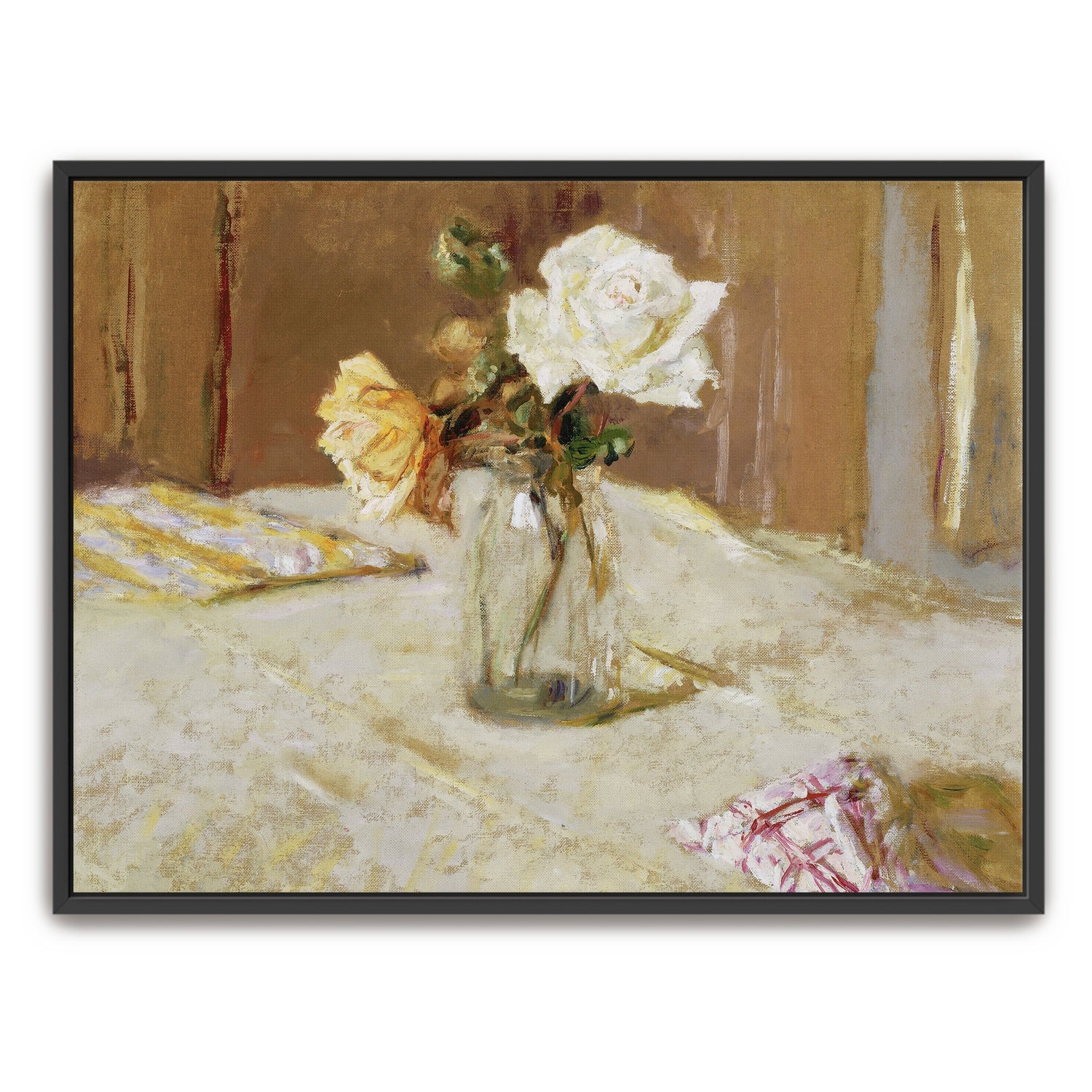
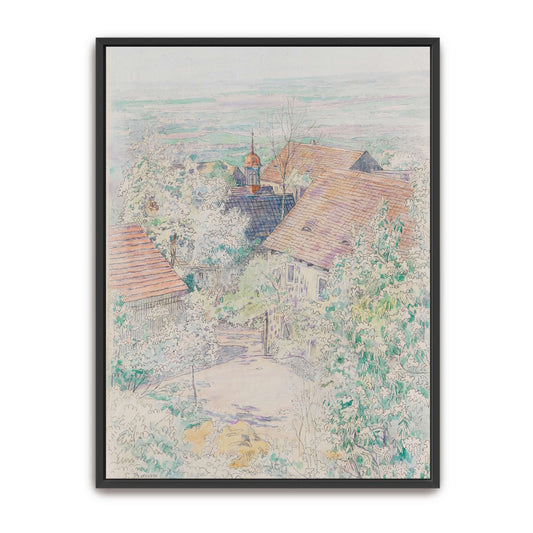
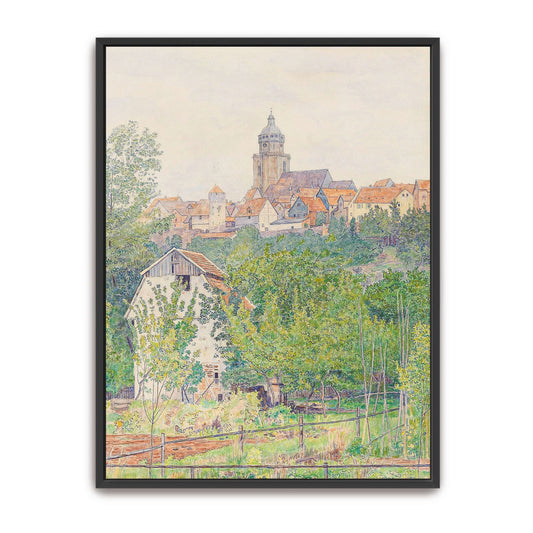
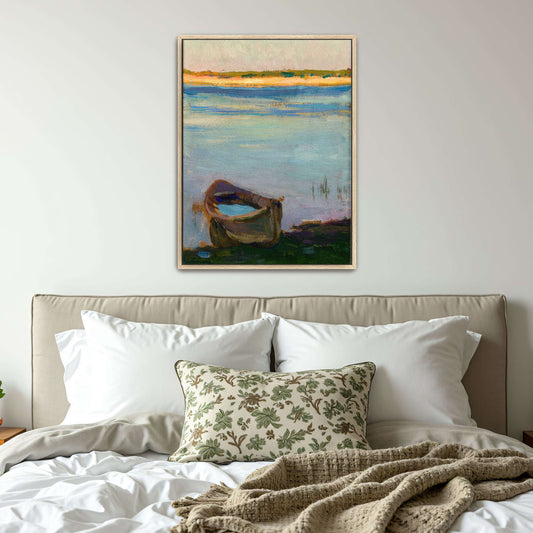
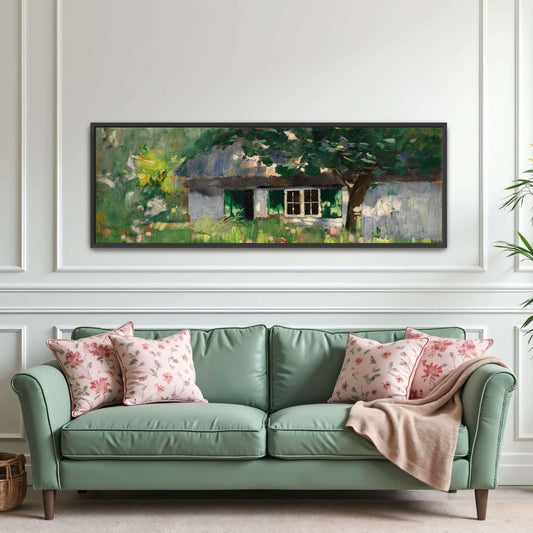
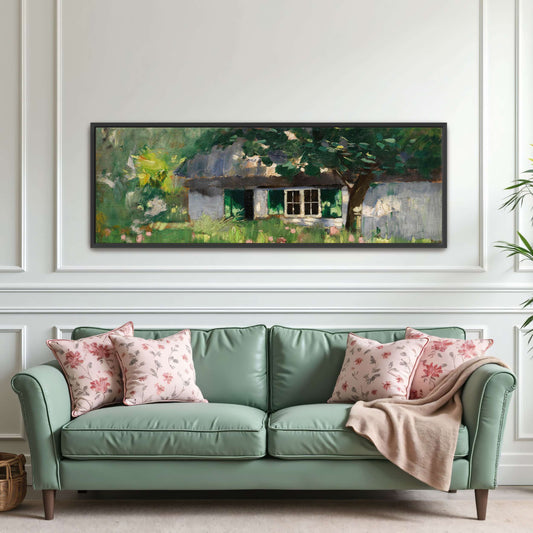
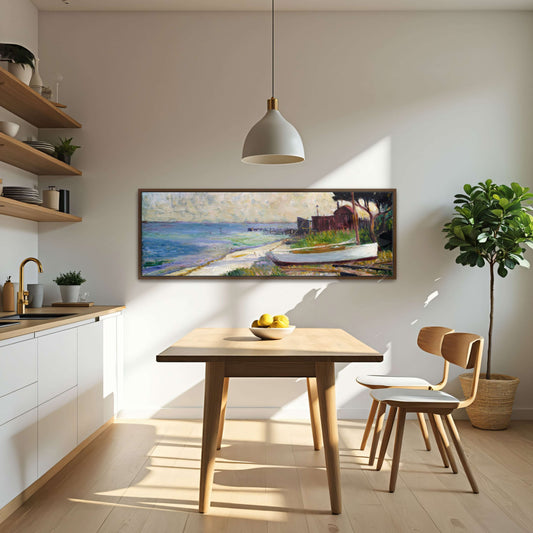
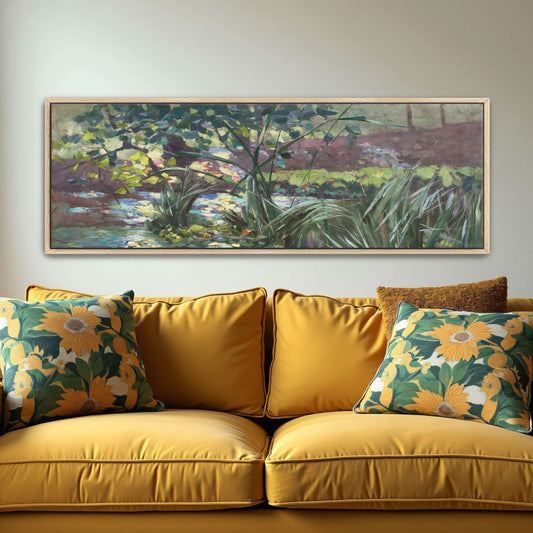
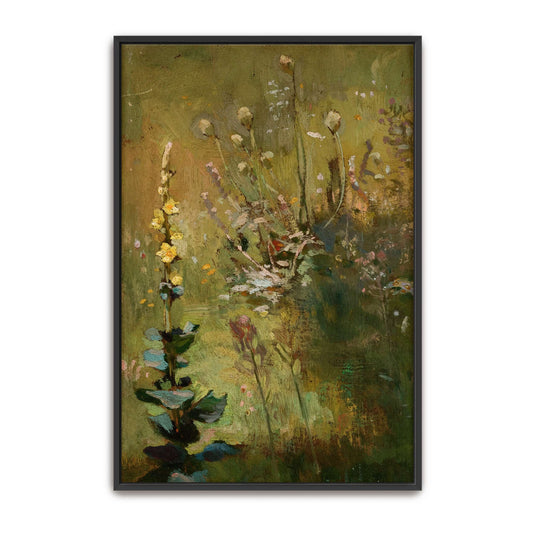
Impressionism began in France in the 1870s. Its painters worked outdoors, used broken strokes of pure color, and tried to catch changing light. The name came from Monet's Impression, Sunrise, shown at the group's first exhibition in 1874. This impressionist wall art covers the French founders and the painters who took the style to Germany, Poland and the United States.
Claude Monet
Claude Monet (1840–1926) painted the same places again and again to study light and weather. Our prints include Water Lilies (1906) and the foggy Waterloo Bridge, Gray Weather (1900). Stacks of Wheat (End of Summer) dates from 1890 to 1891. Cliffs at Pourville (1882) looks down on the Normandy sea. See every work on Claude Monet Prints.
Impressionism beyond Monet
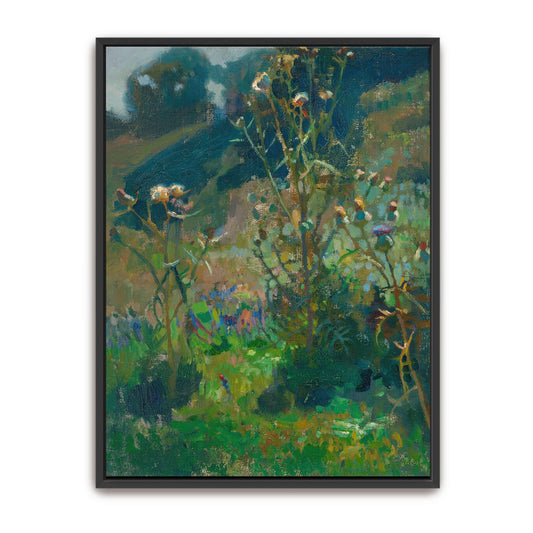
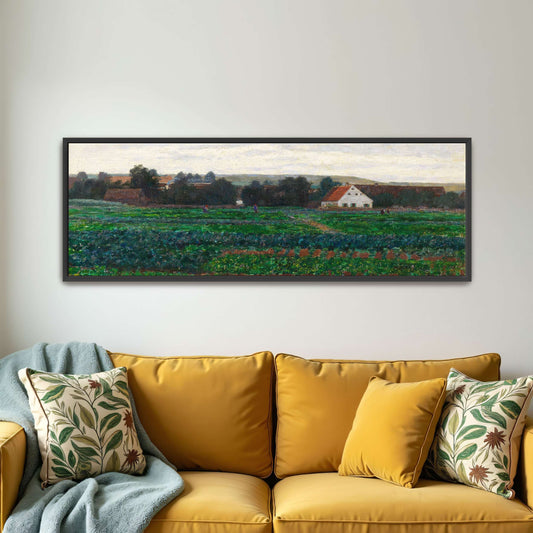
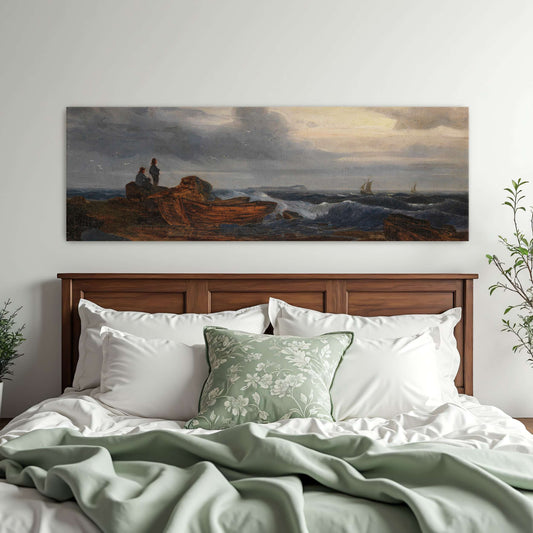
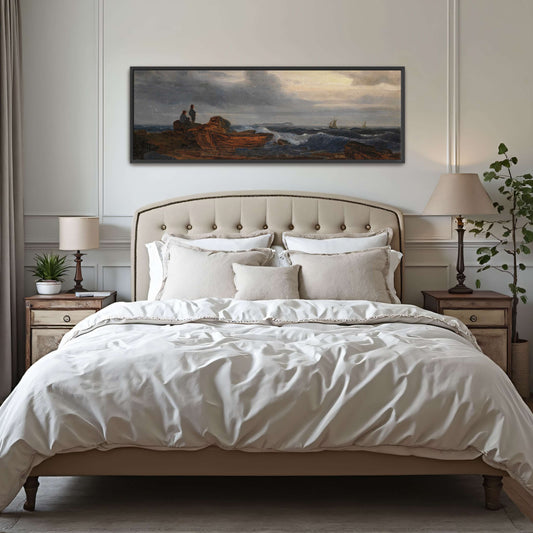
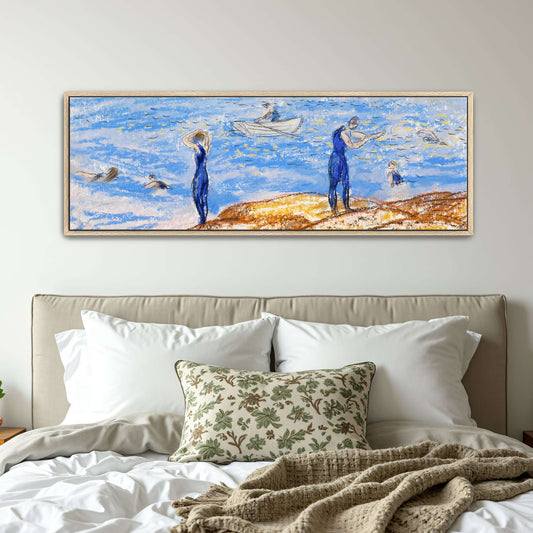
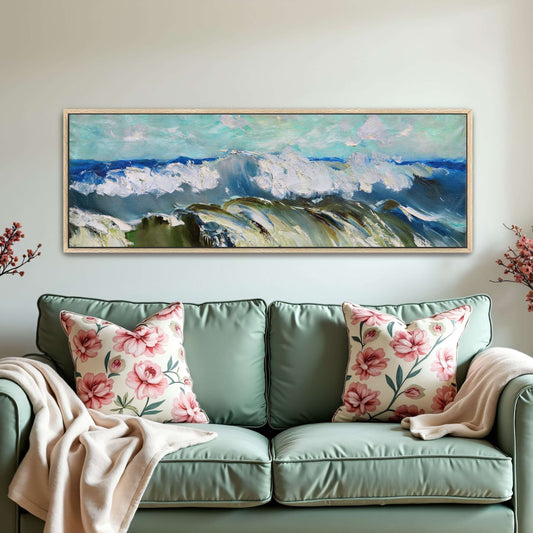
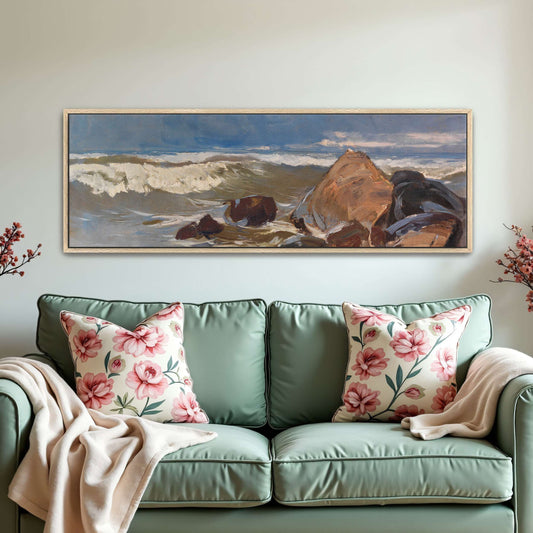
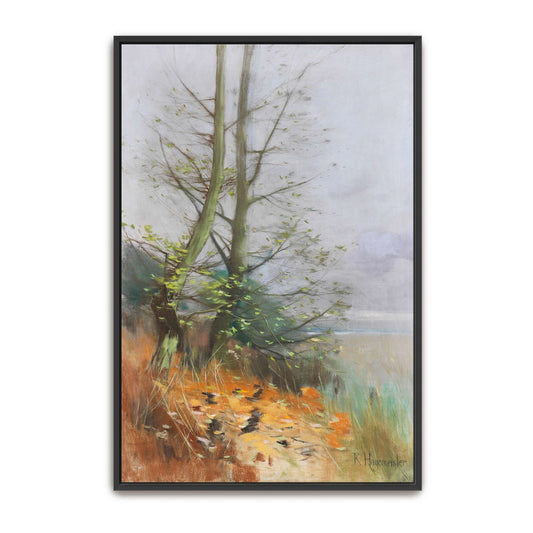
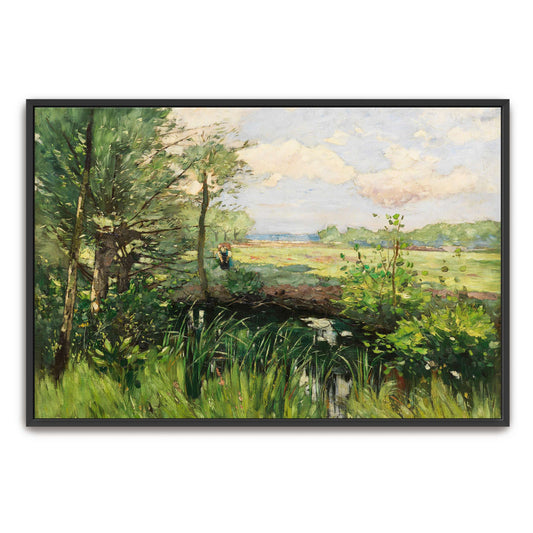
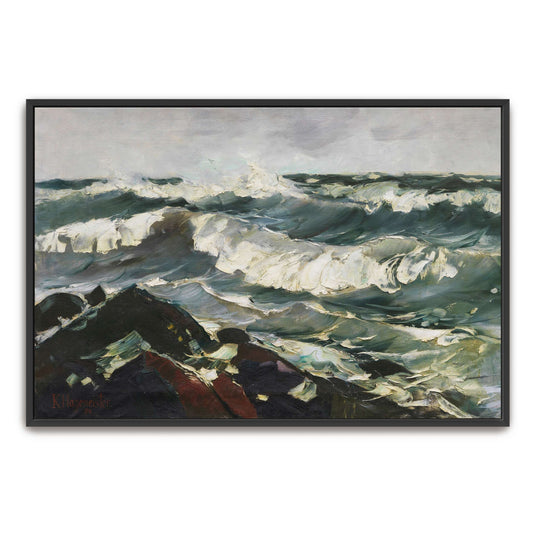
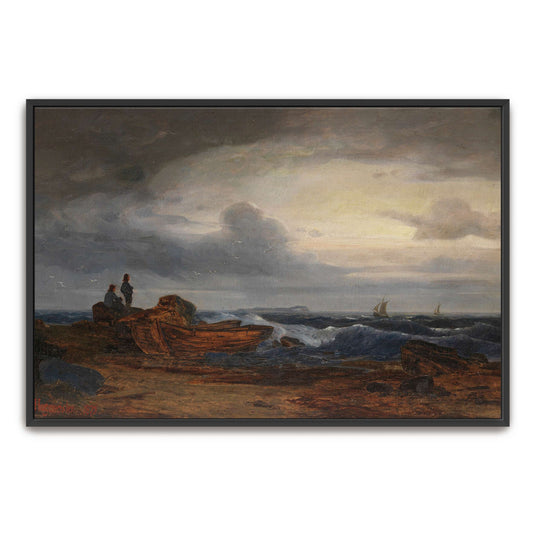
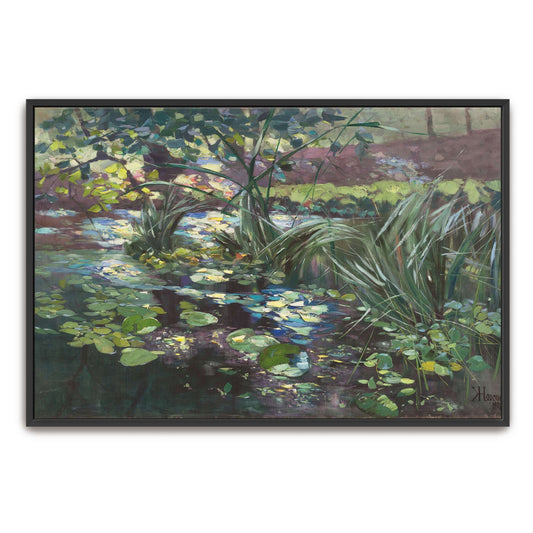
Stanislas Lépine showed at the first Impressionist exhibition in 1874. His Canal in the Moonlight is a quiet night scene. In Germany, Karl Hagemeister painted the lakes of Brandenburg and the Baltic coast. His The Wave, Rough Sea (1911) is close to abstract. Paul Baum later used the small dots of Neo-Impressionism. Jan Stanisławski painted small, bright landscapes of Poland and Ukraine, like Poppies in Bloom. In America, William James Glackens moved toward the warm color of Renoir; see The Bathing Hour, Chester, Nova Scotia (1910). Henri Martin used a dotted technique to paint his garden at Marquayrol.
How to choose an impressionist print
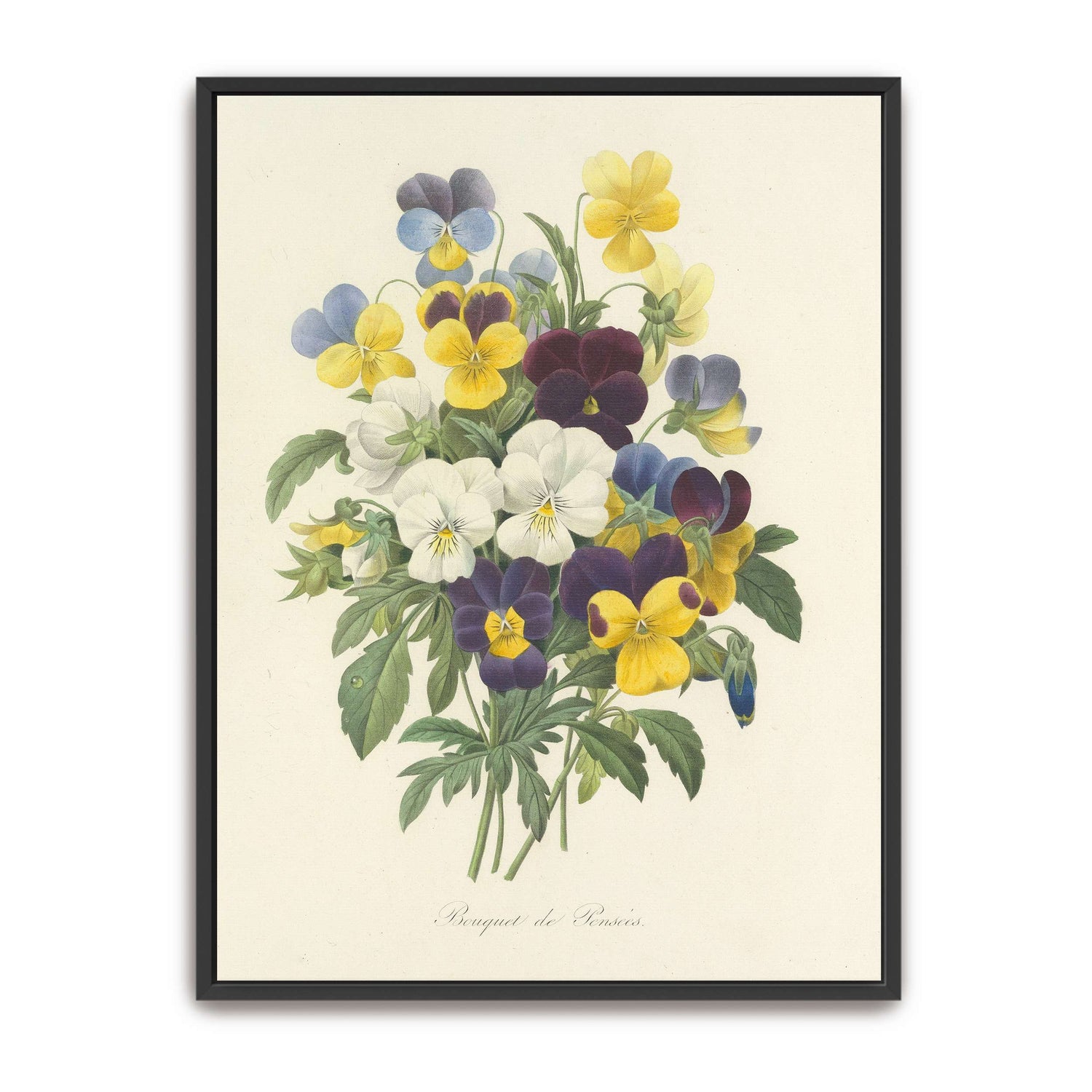
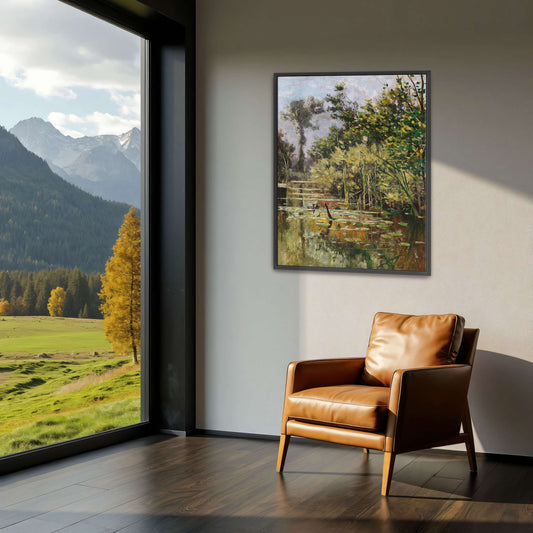
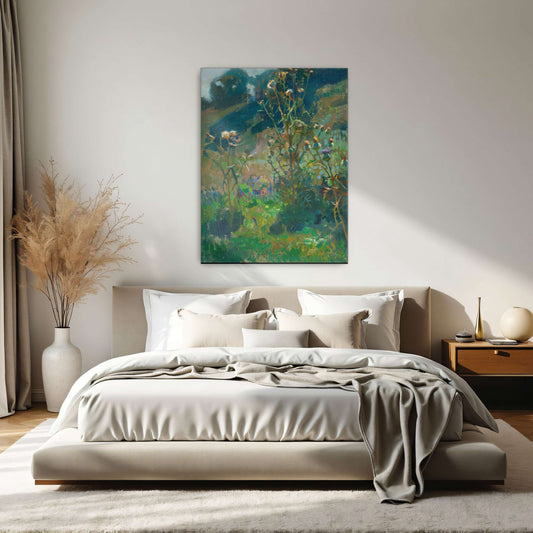
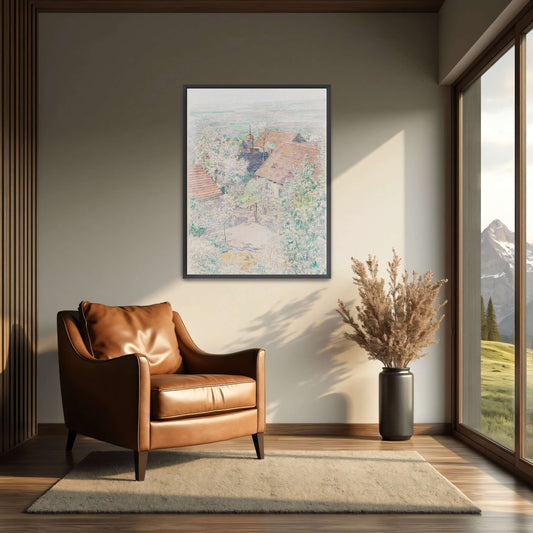
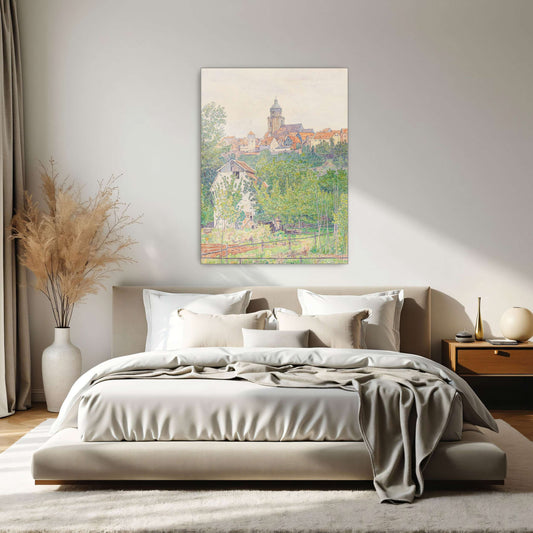
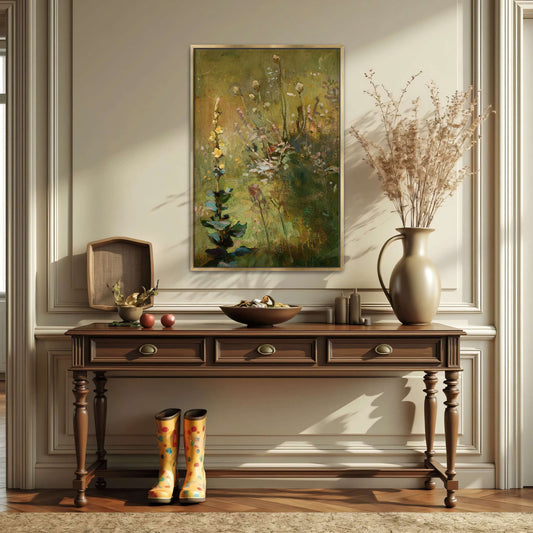
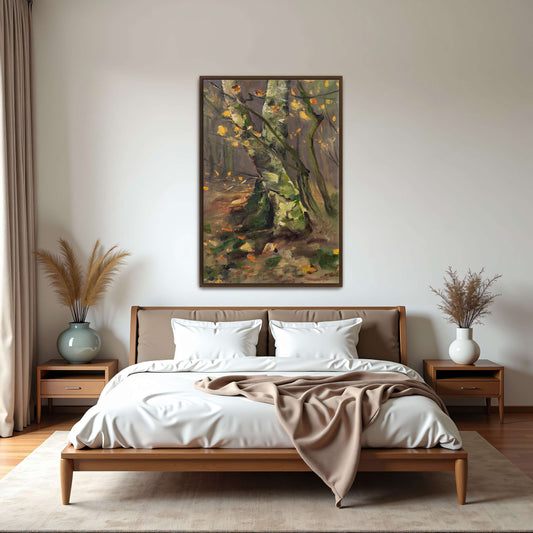
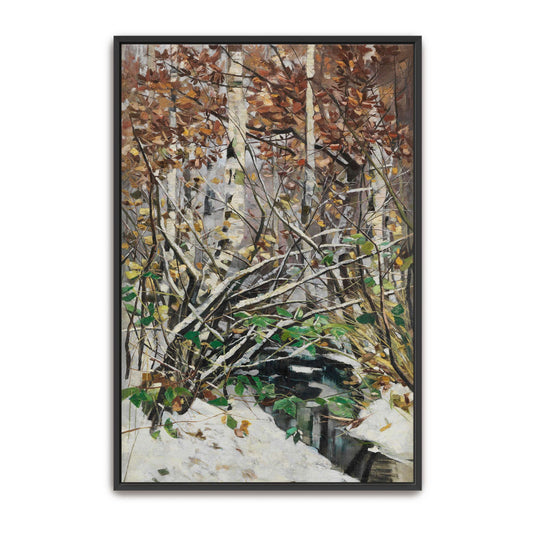
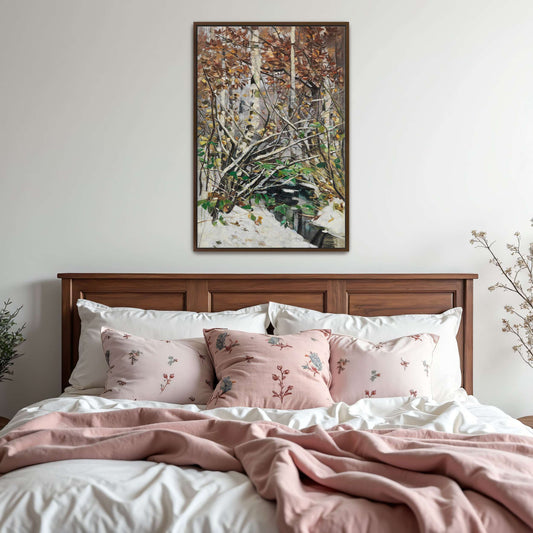
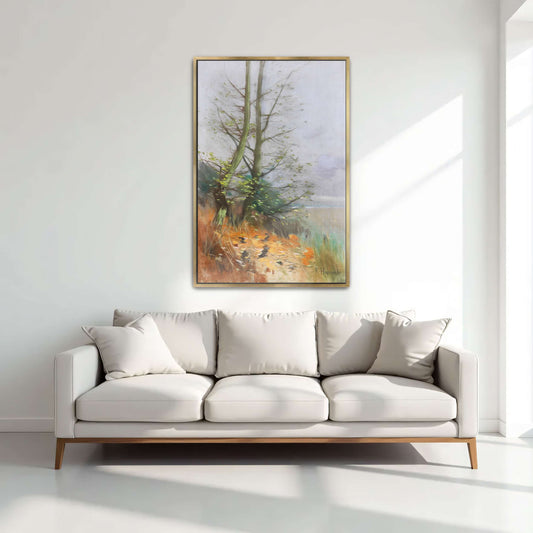
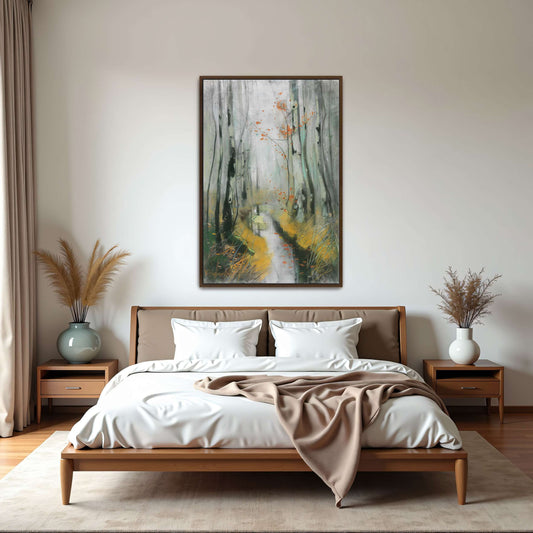
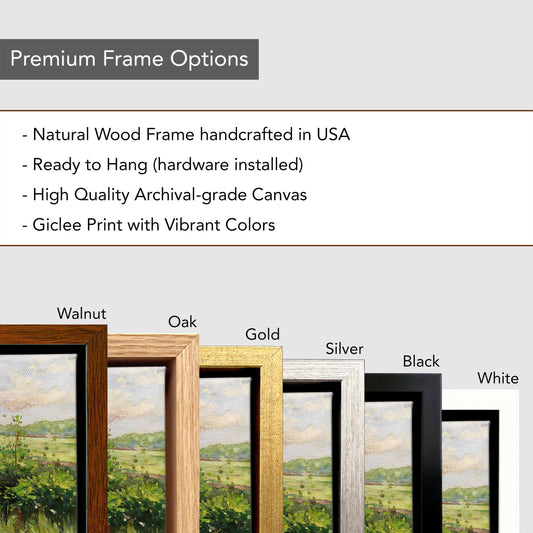
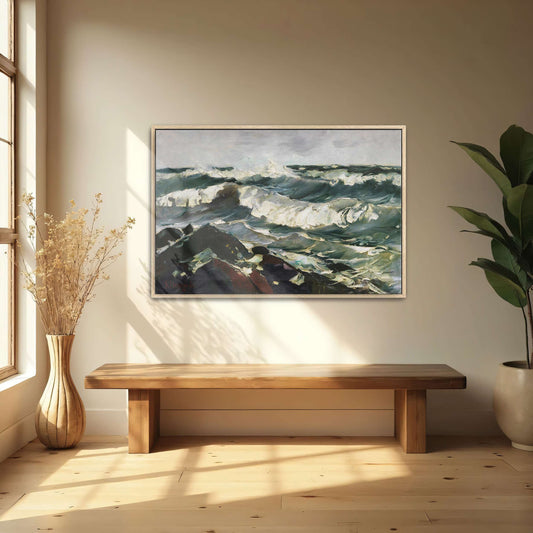
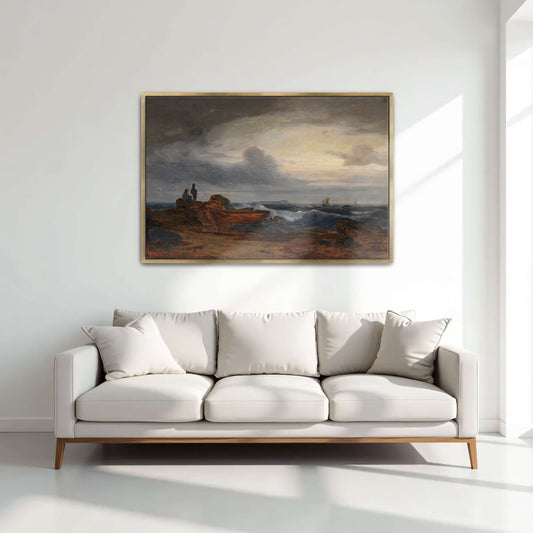
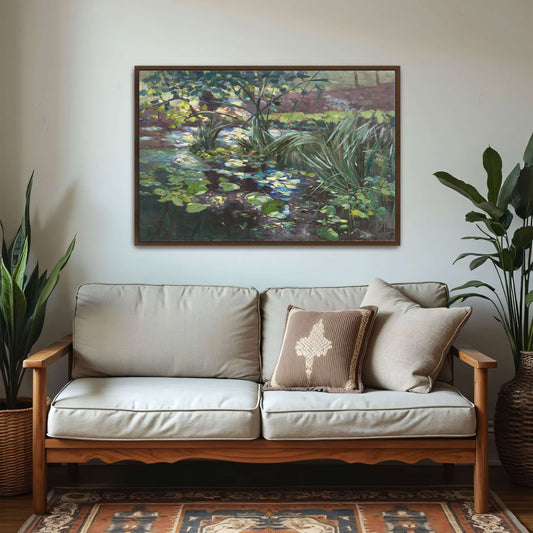
Impressionist paintings are built from small strokes. They read well from across a room and reward a closer look. Large sizes show the brushwork best. Water and garden scenes suit bedrooms and bathrooms. Snow and sea views suit a hallway or an office. For a group, keep one frame color across all the prints. Walnut and oak suit warm summer scenes, while white and silver suit snow and water. Monet's water lilies and gardens pair well with green or blue rooms. Hagemeister's storms and Baum's winter villages suit cooler, gray rooms.
Sizes, formats and prices
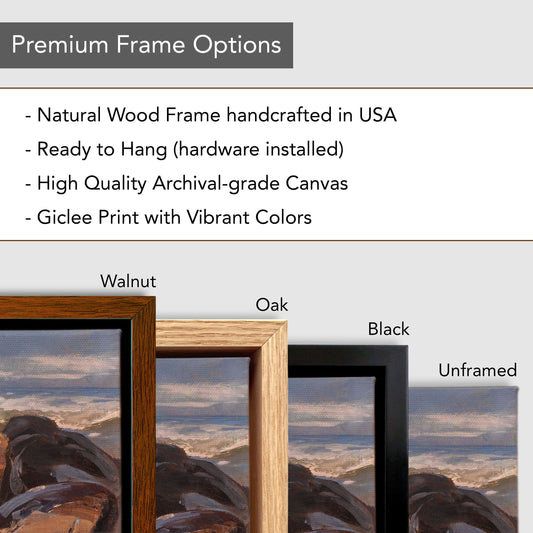
Sizes run from 8 × 12 to 28 × 42 inches, or from 11 × 14 to 30 × 40 inches. The range depends on the shape of the work. Fine art paper starts at $30, gallery-wrapped canvas at $50 and framed canvas at $90. Frames come in black, white, gold, silver, walnut and oak. The paper is 340gsm, 100% cotton rag, and ships rolled in a tube. The canvas is acid-free, with giclée printing rated for more than 100 years of fade resistance. Some works also come as 3:1 panoramic prints, from 8 × 24 to 20 × 60 inches, starting at $90.
Related collections
For long formats, see Panoramic & Horizontal Wall Art. For the sea, see Seascape Paintings. For quiet, darker scenes, see Moody Wall Art. Vintage Landscape Paintings has landscapes from other movements too.