


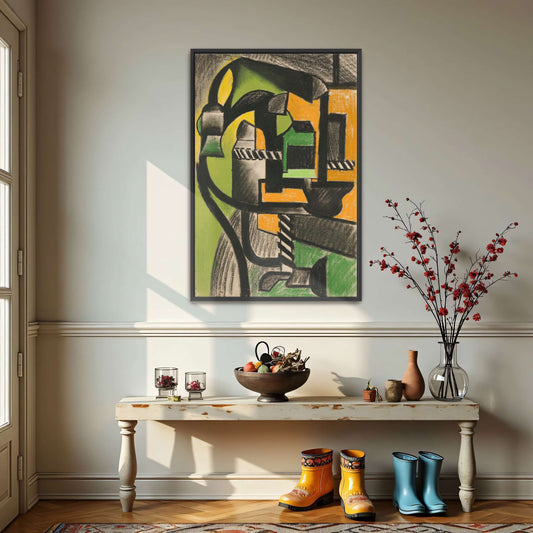

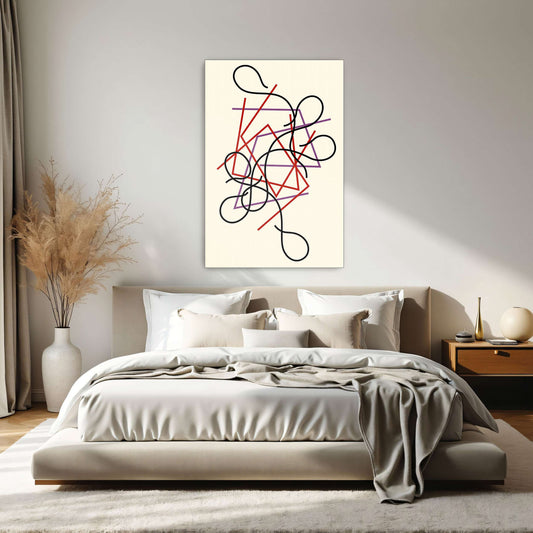


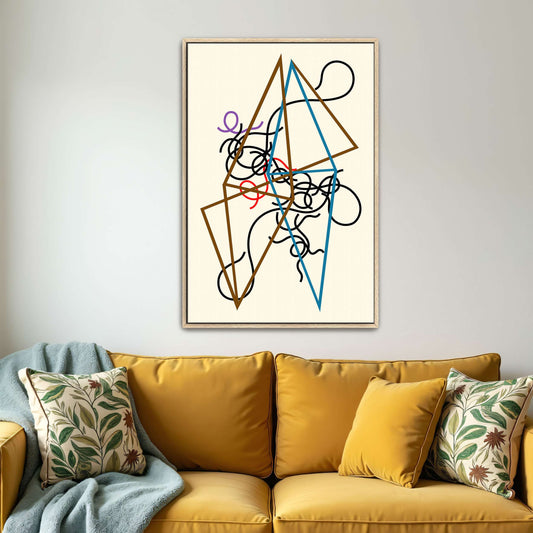


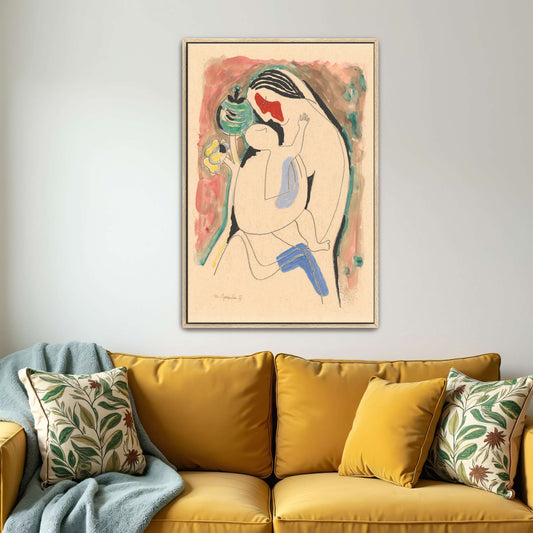










Vintage abstract art prints
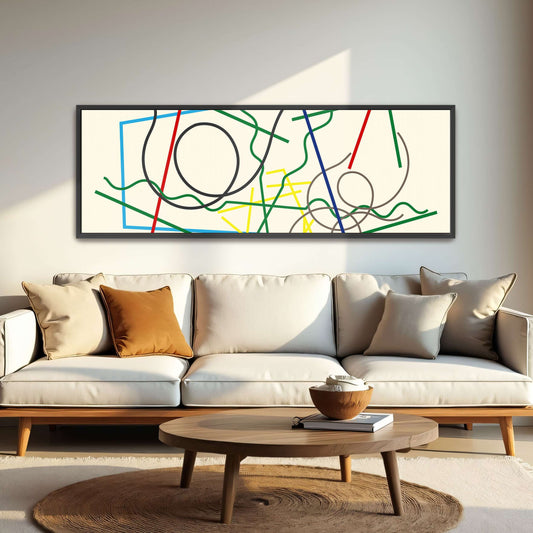
Our abstract wall art centers on early abstraction. Its core is paintings and watercolors made between about 1910 and 1940, when painters first let go of a visible subject. The collection also holds gold-toned abstract watercolors and line works from 2014. Every print is made to order.
How abstract painting began
Around 1910, several painters in Europe began to make pictures with no recognizable subject. Wassily Kandinsky in Munich was one of the first. He wanted color and shape to work on the viewer the way music does. In Stuttgart, Adolf Hölzel was also moving toward abstract composition.
After World War I, the Bauhaus school in Germany became a center for this work. Kandinsky and Paul Klee both taught there. Otto Freundlich, Rudolf Bauer and Hölzel did not teach at the Bauhaus. They worked alongside it, in Paris, Berlin and Stuttgart. Two of Hölzel's students, Johannes Itten and Oskar Schlemmer, later taught at the Bauhaus.
Painters in this collection
Kandinsky and Klee each have their own page: Wassily Kandinsky Prints and Paul Klee Prints.
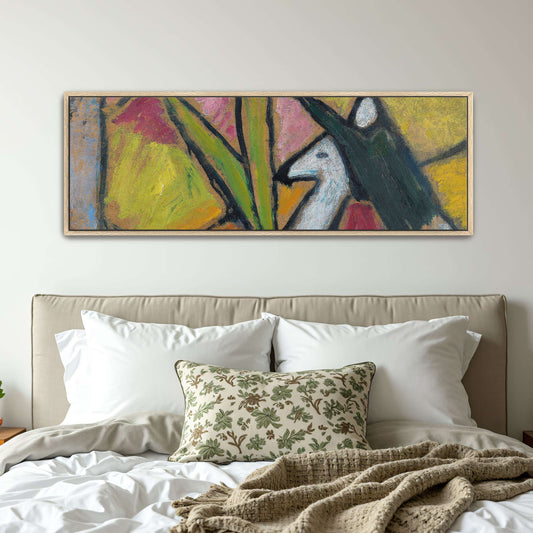
Alexej von Jawlensky (1864–1941) was Kandinsky's friend in Munich. From 1917 he painted series of faces reduced to a few lines and colors: Mystical Heads, Abstract Heads and Meditations. See Alexej von Jawlensky Prints.
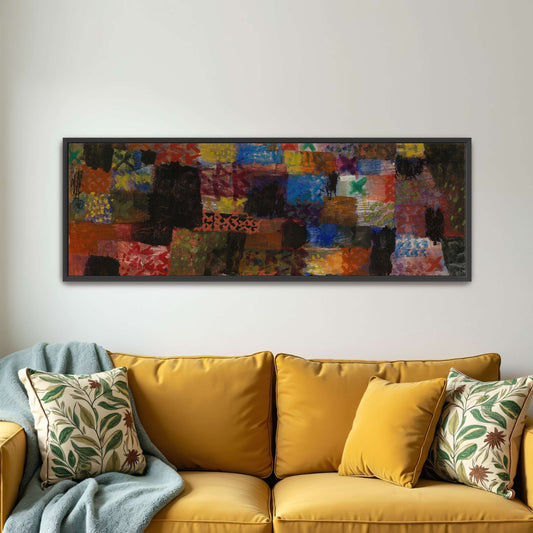
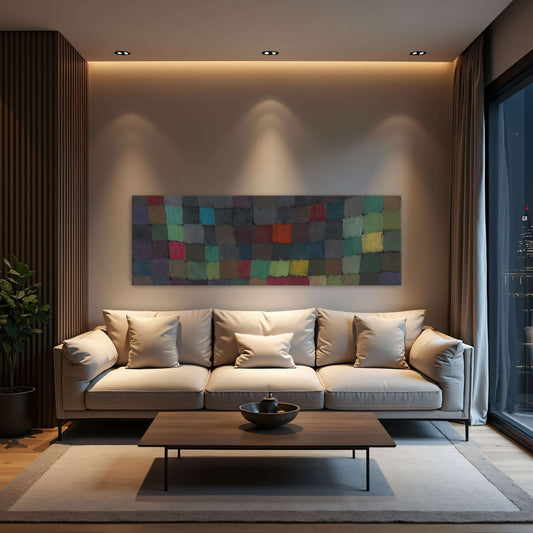
Otto Freundlich (1878–1943) built his pictures from fields of color that fit together like a mosaic. He worked in Paris for most of his career. The Nazis attacked his work, and he was murdered in 1943. Rudolf Bauer (1889–1953) painted circles, bars and floating forms that he called non-objective. Solomon R. Guggenheim collected his work in depth.
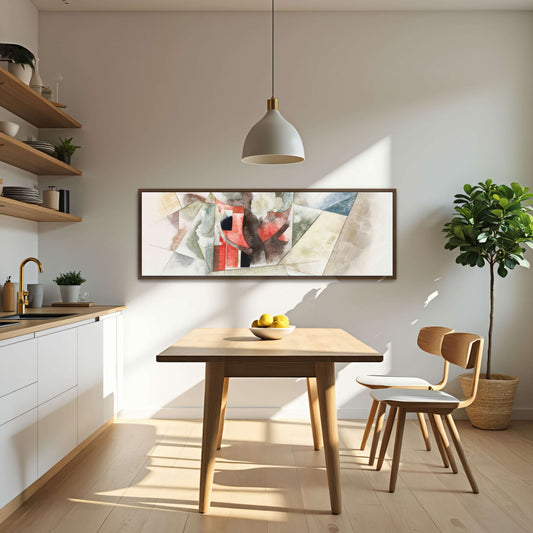
The collection also includes Mikuláš Galanda of Slovakia, Wilhelm Morgner, Marsden Hartley, and Koloman Moser, whose 1913 cloud studies come close to abstraction. For all the early abstract painters in one place, see Bauhaus & Early Abstract Art Prints.
Works to start with
- Wassily Kandinsky, Quadrate mit konzentrischen Ringen (1913)
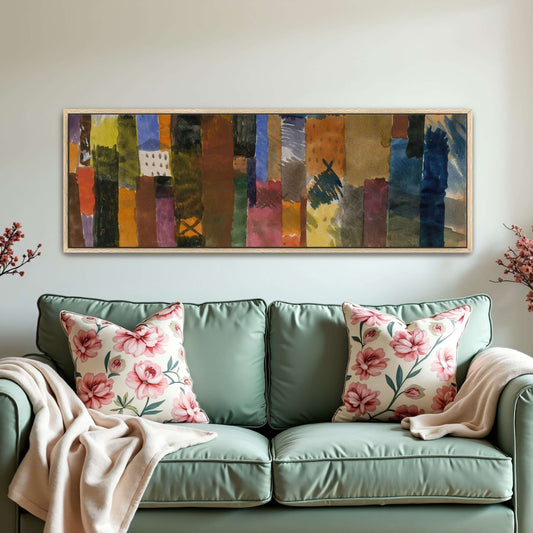
- Paul Klee, May Picture (1925)
- Alexej von Jawlensky, Abstract Head, Apollo (1931)
- Otto Freundlich, My Sky is Red (1933)
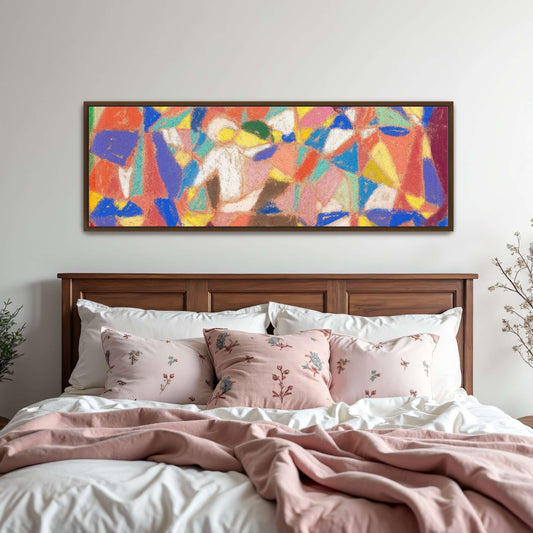
- Rudolf Bauer, Untitled (Abstract Forms) (ca. 1917–18)
- Adolf Hölzel, Farbkomposition mit Rund- und Ovalformen (1933)
- Wilhelm Morgner, Astrale Composition XVI (1912)
- Koloman Moser, Wolkenstudie (1913)
Sizes and frames
Standard prints run from 8 × 12 to 28 × 42 inches, or from 11 × 14 to 30 × 40 inches. The range depends on the shape of the work. Each product page shows the current price for every size and format. Frames come in black, white, gold, silver, walnut and oak. Panoramic prints come in 8 × 24 to 20 × 60 inches. Panoramic framed canvas comes in black, walnut or oak.
Placing abstract art in a room
Abstract prints are easy to place because there is no subject to clash with a room. Pick one or two colors from the print and repeat them in cushions or a rug. A single large print works above a sofa. A row of three smaller ones suits a hallway.
Black or white frames suit most early abstracts. Oak warms up the earth tones in Freundlich and Klee. For work built from clear shapes, see Geometric Wall Art. For gold tones and a newer look, see Contemporary Wall Art.