


























Choosing a ship painting for your home
A historic ship painting captures the scale of the sea and human navigation. Our collection includes historic ship paintings from European and American artists. Unlike generic decor, these prints show real naval vessels, working ports, and recreational boats painted during the 18th, 19th, and early 20th centuries. Every print reproduces a public-domain work using archival giclée inks on canvas or cotton paper.
Vessels, harbors, and calm waters
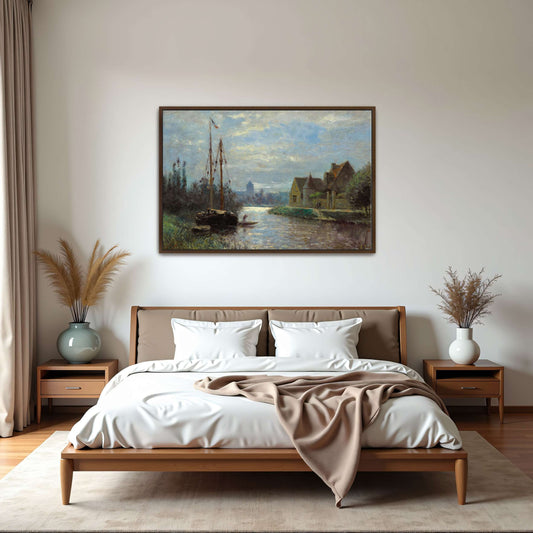
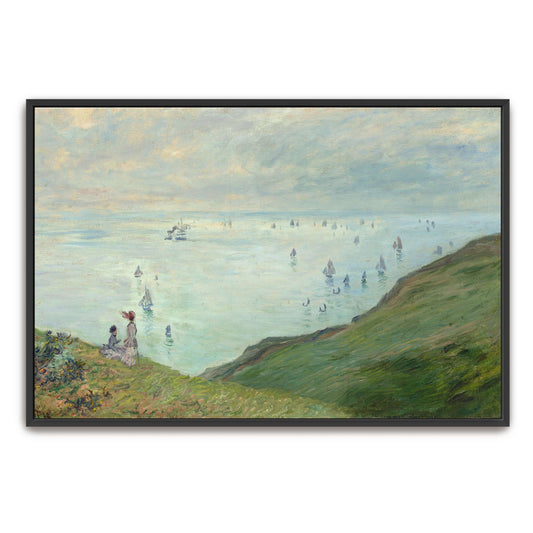
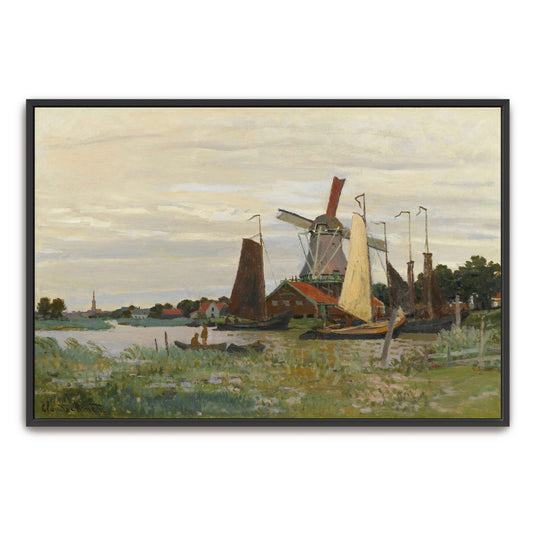
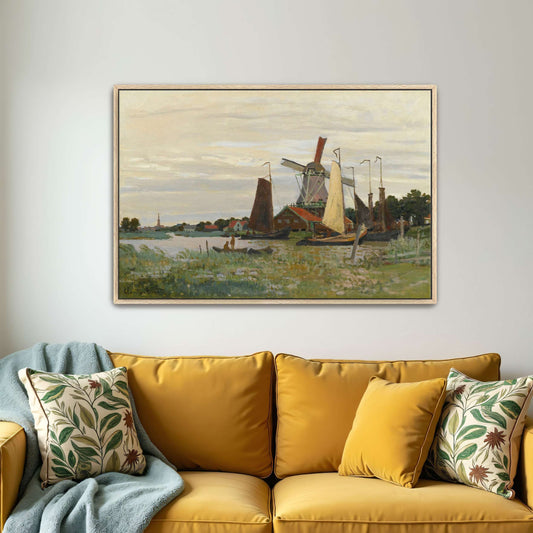
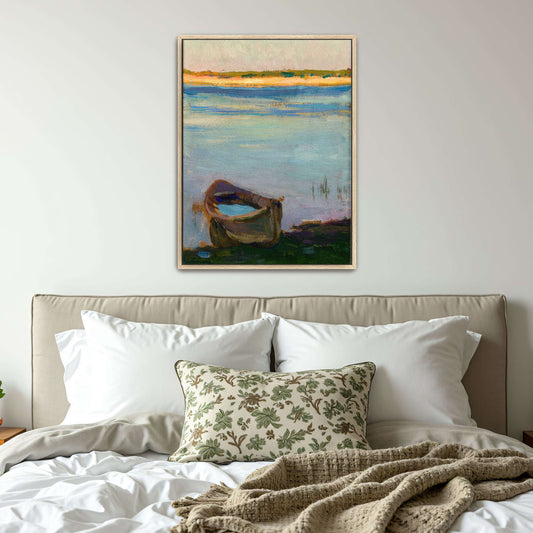
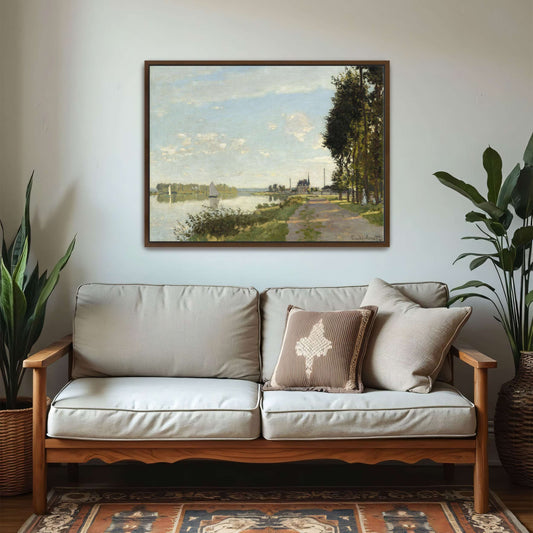
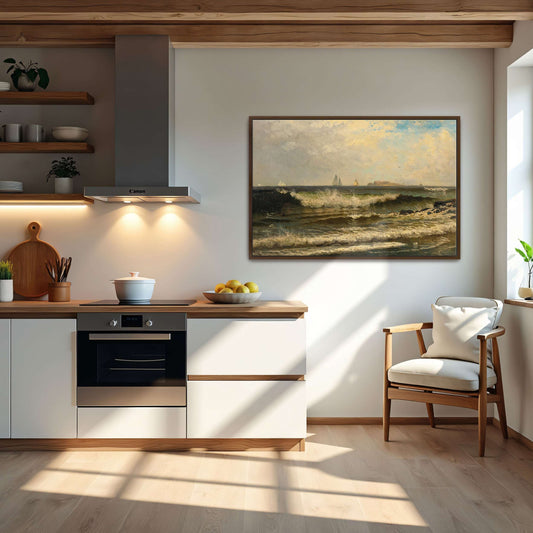
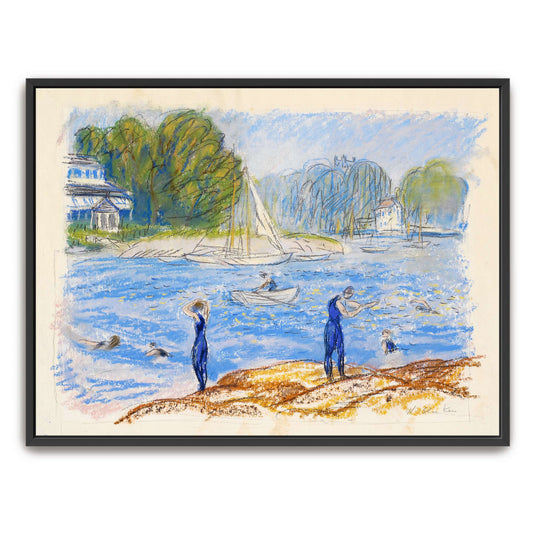
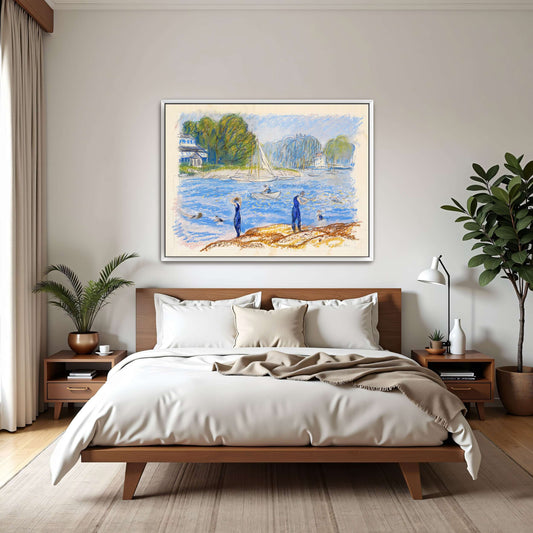
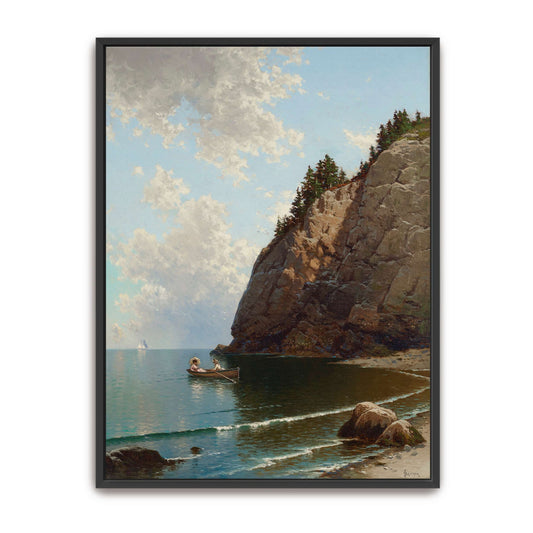
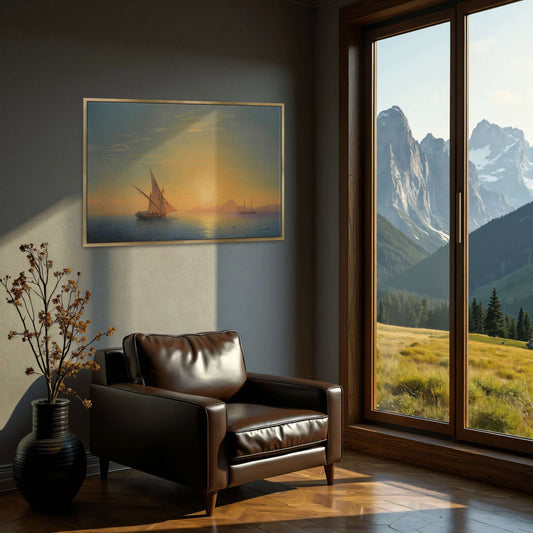
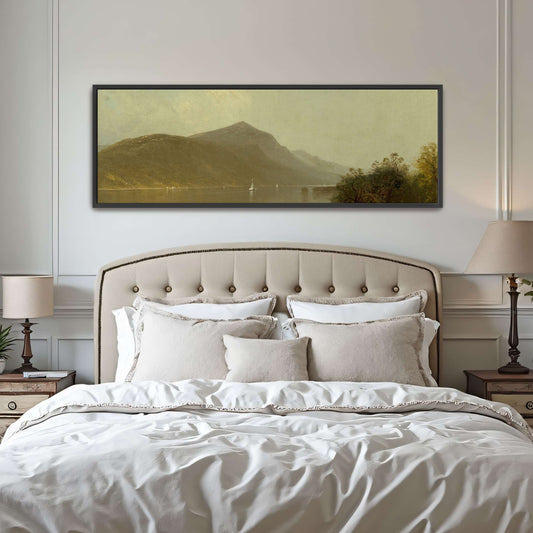
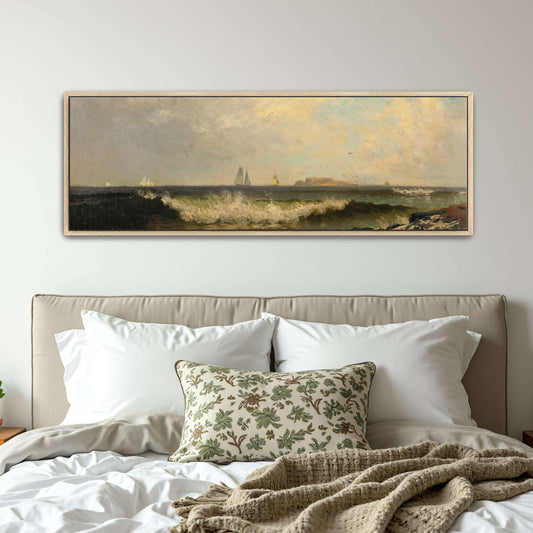
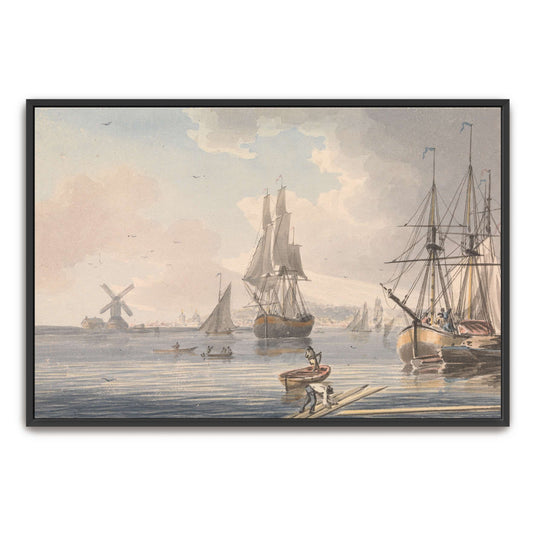
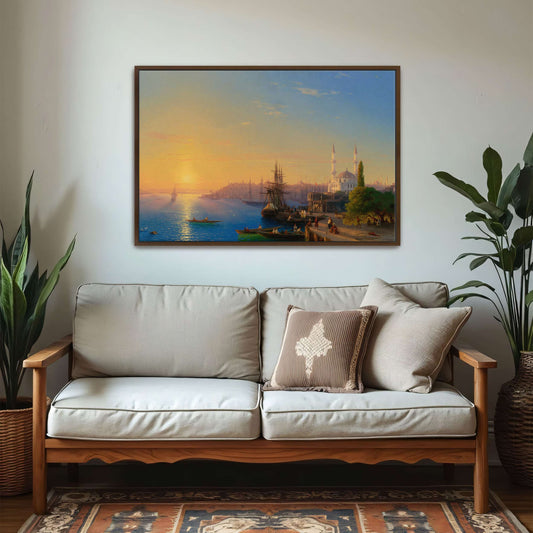
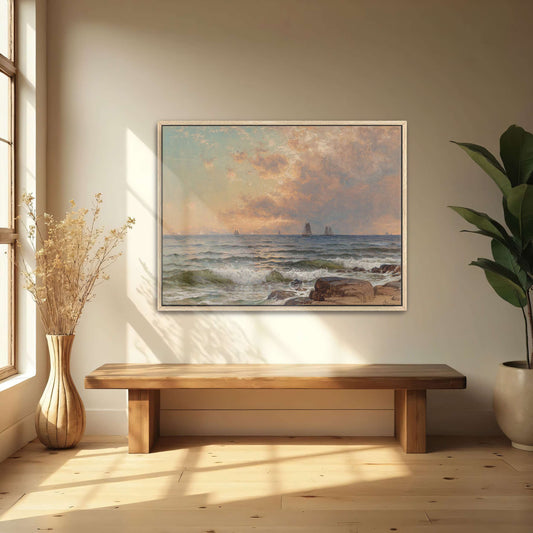
The works in this collection divide into several maritime subjects. Tall ships and warships dominate the naval scenes. For an 18th-century sailing ship painting, see John Cleveley the Younger's English Frigate off Calshot Castle. It shows an English frigate and other ships in the Solent. Other works focus on busy harbors, like his Ships in Harbor (Deptford Dockyard, Kent). If you prefer quieter waters, a sailboat painting brings a restful mood. Sailboats on calm bays offer quiet reflections. Alfred Thompson Bricher painted coastal New England waters, seen in Castle Rock, Marblehead (1878). In Sunset over Ischia (1857), Ivan Konstantinovich Aivazovsky contrasts warm evening light against distant sails. River scenes show smaller leisure craft, like Claude Monet's River Scene with Sailboats (Argenteuil) (c. 1872). For open water without ships, explore our Seascape Paintings.
About the painters
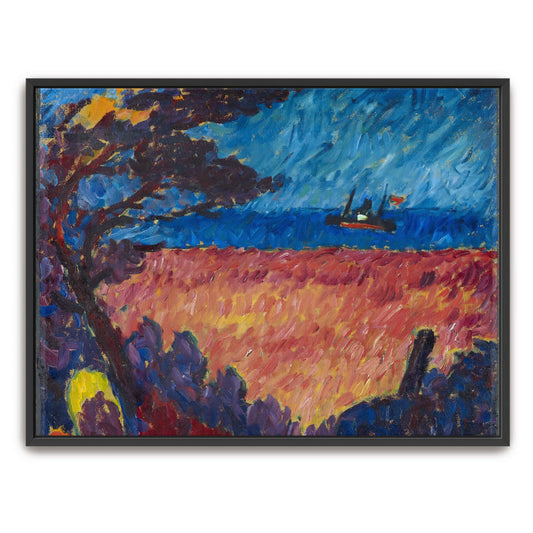
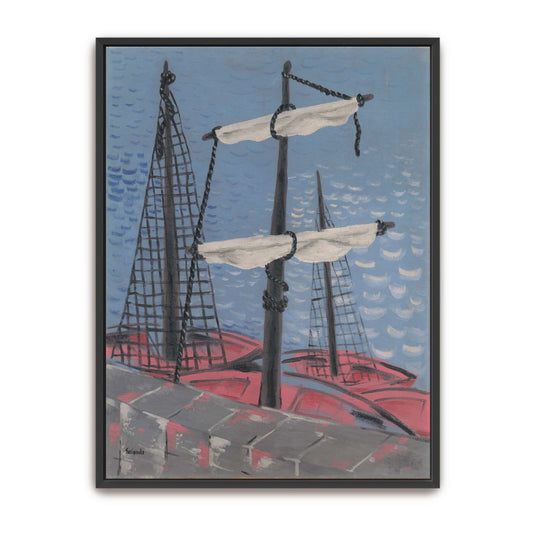
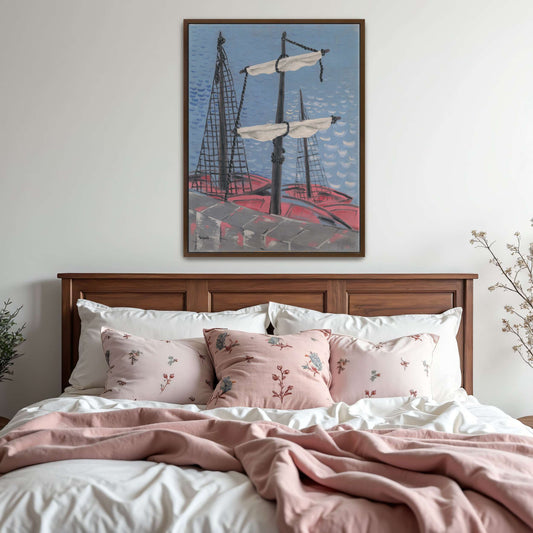
Ivan Aivazovsky was born in Feodosia, Crimea, and was known for his seascapes, ships, and harbor views. His Constantinople and the Bosphorus (1856) captures evening light over a crowded waterway. John Cleveley the younger was an 18th-century marine painter. His Deptford Dockyard shows ships at a Royal Navy dockyard on the Thames. Alfred Thompson Bricher painted the New England coast and the Hudson River, often showing sailboats in calm light. Claude Monet lived at Argenteuil on the Seine in the 1870s and painted sailboats on the river there. You can find more river scenes in our Claude Monet Prints collection. The collection also includes works by Stanislas Lépine, William James Glackens, and Mikuláš Galanda, whose Fishing Boats (1932) offers a 20th-century interpretation.
Sizes
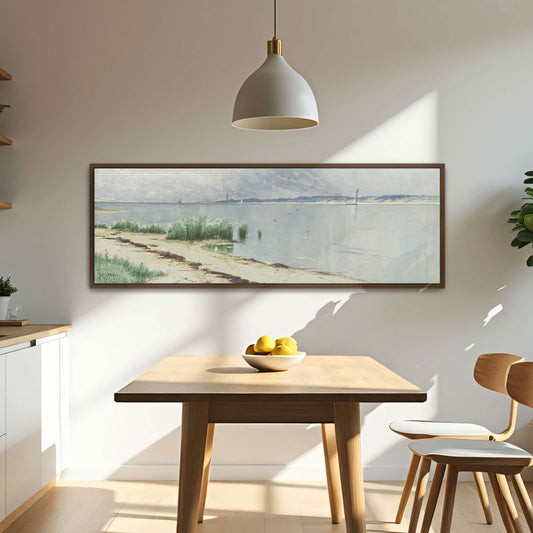
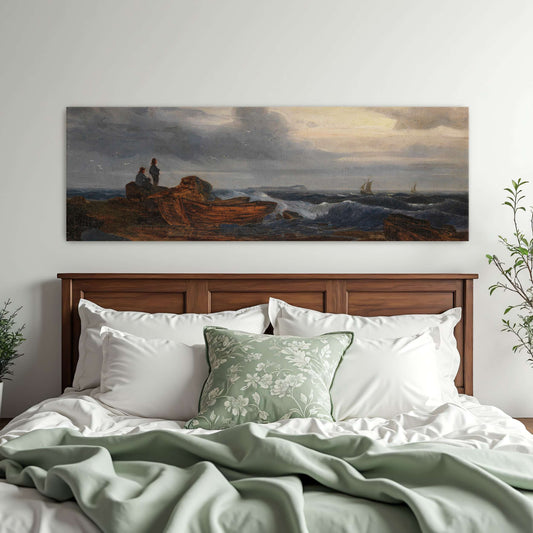
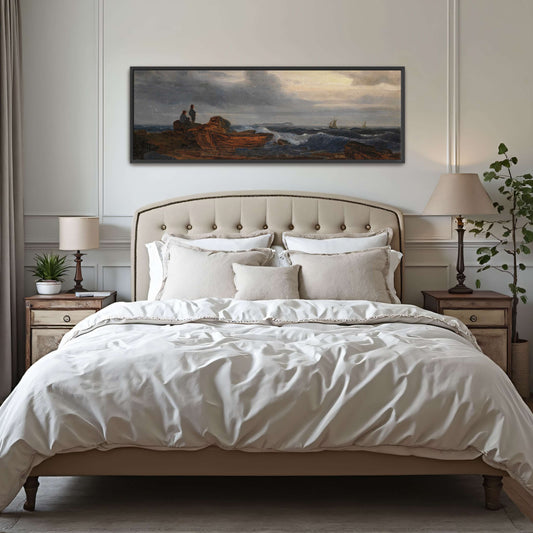
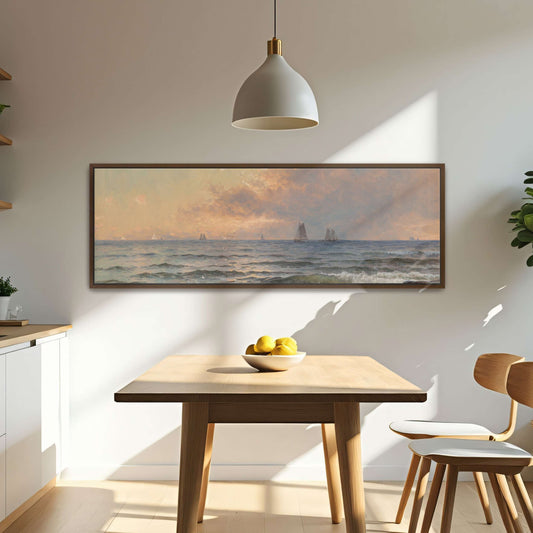
Prints come in standard ratios and panoramic formats. Standard prints are available on fine art paper, gallery-wrapped canvas, or in floating wood frames. Our paper option uses thick 340 gsm 100% cotton rag and ships rolled in a tube. Framed canvases arrive ready to hang with attached wire. Frames for standard prints come in black, white, gold, silver, walnut, and oak. Panoramic prints come in black, walnut, and oak frames, or as gallery-wrapped canvas. Browse our Panoramic & Horizontal Wall Art collection for more wide formats.
| Format and ratio | Dimensions |
|---|---|
| Standard 2:3 | 12 × 18 in |
| Standard 2:3 | 16 × 24 in |
| Standard 2:3 | 24 × 36 in |
| Standard 3:4 | 12 × 16 in |
| Standard 3:4 | 18 × 24 in |
| Standard 3:4 | 24 × 32 in |
| Panoramic 3:1 | 12 × 36 in |
| Panoramic 3:1 | 16 × 48 in |
| Panoramic 3:1 | 20 × 60 in |
Ideas for nautical rooms
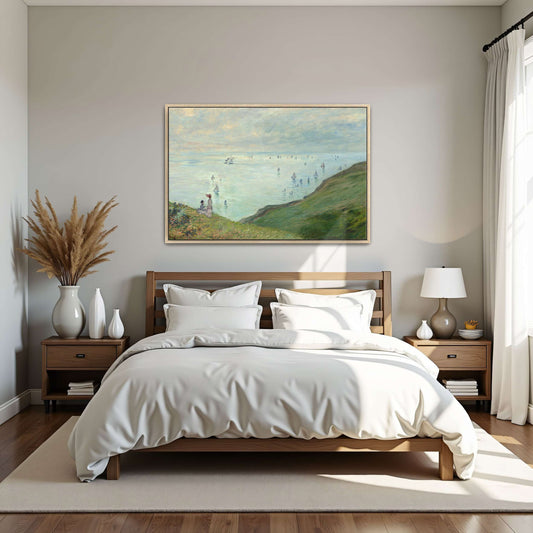
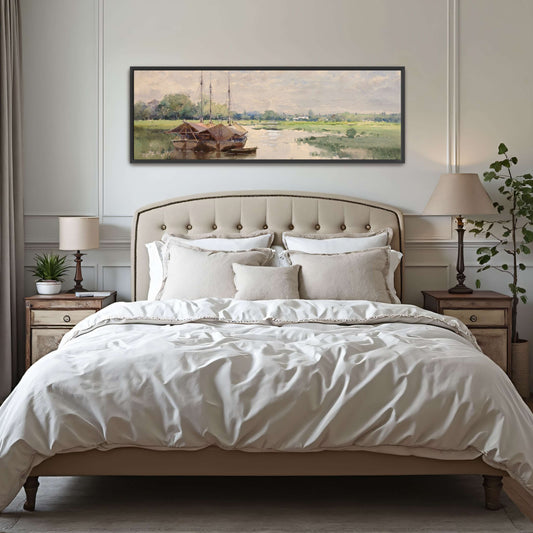
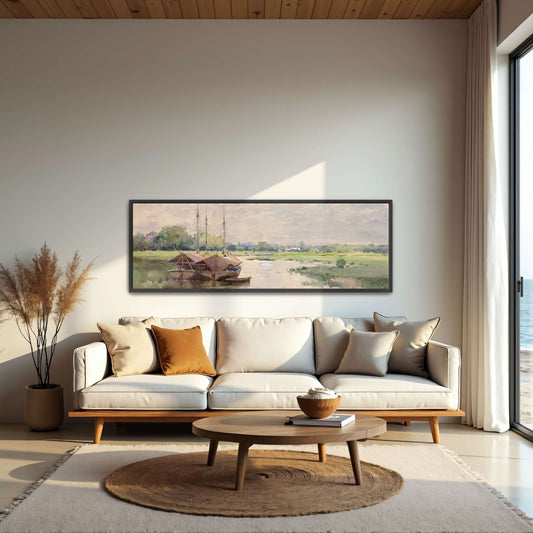
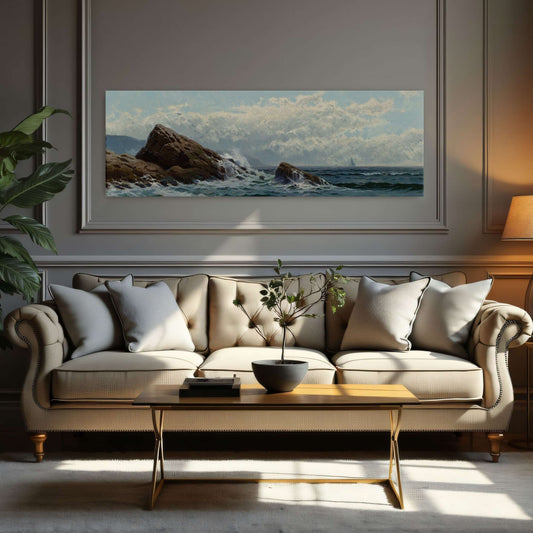
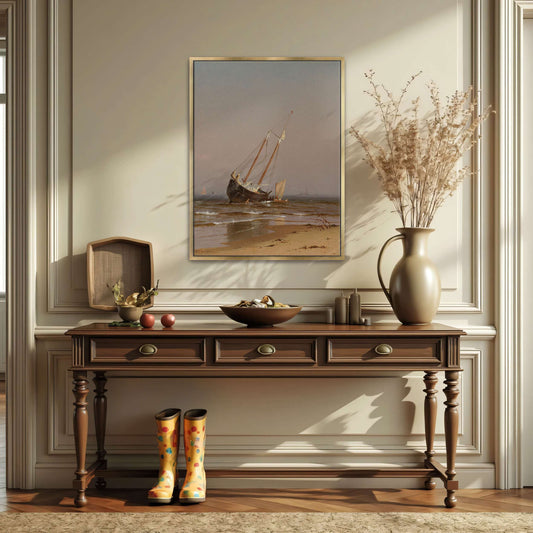
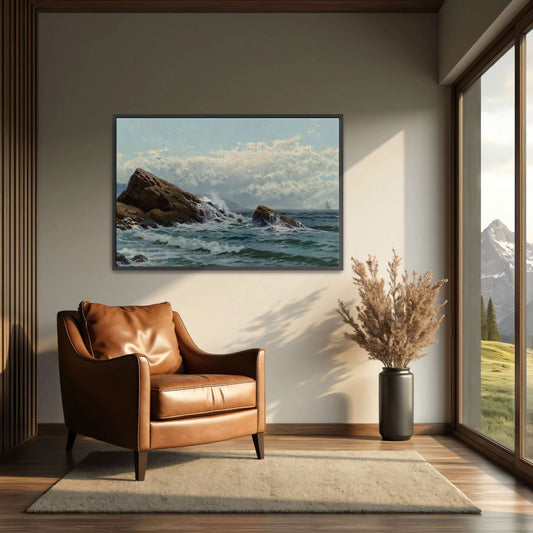
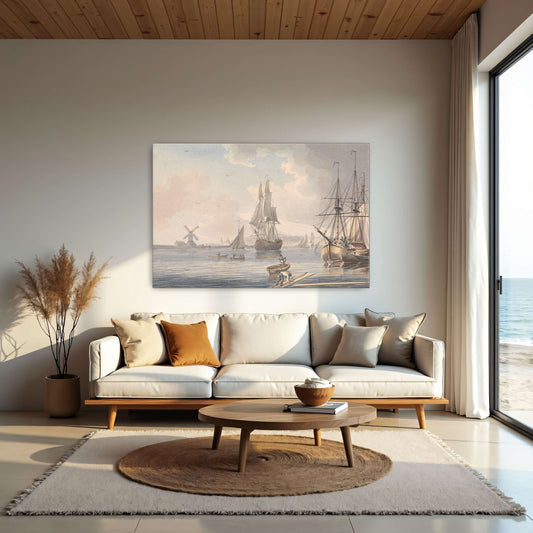
A vintage ship painting works well in rooms with dark wood or leather. In a study or home library, a frigate or harbor scene suits dark wood shelves and leather chairs. This historic imagery offers a classic alternative to modern nautical wall art. In a living room, hang a horizontal harbor view above a sofa. A common guideline is choosing art about two thirds the width of the furniture below it. Leave 6 to 10 inches between the top of the sofa back and the bottom of the art. On an open wall without furniture, aim for the center of the print to sit roughly 57 inches from the floor.
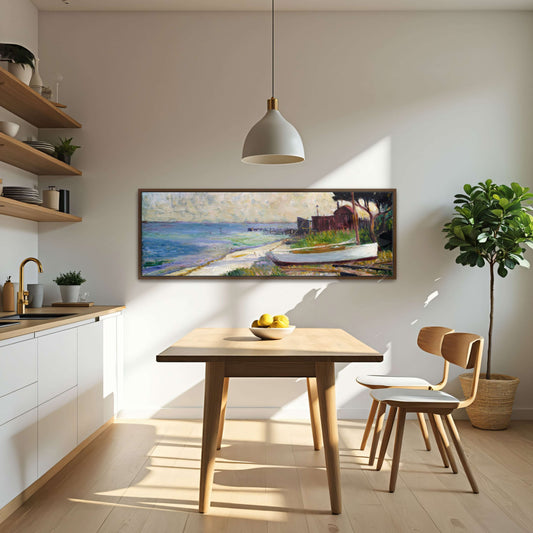
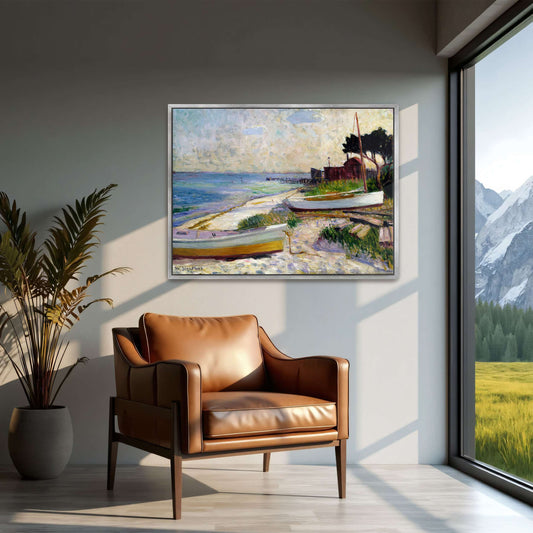
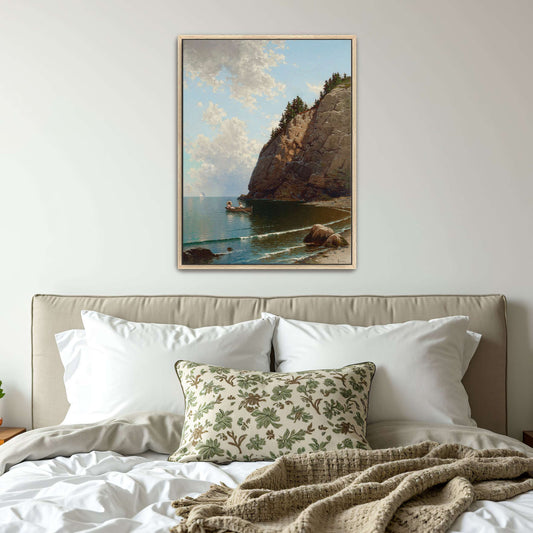
In a coastal home, light sailboat scenes with sandy beaches keep walls feeling open. Oak and walnut floating frames suit traditional furniture, while black frames provide crisp borders in modern rooms. Above a fireplace, a wide canvas fills the horizontal space cleanly. For more mantel placement ideas, visit Art Above Fireplace.