




























Geometric wall art and pattern prints
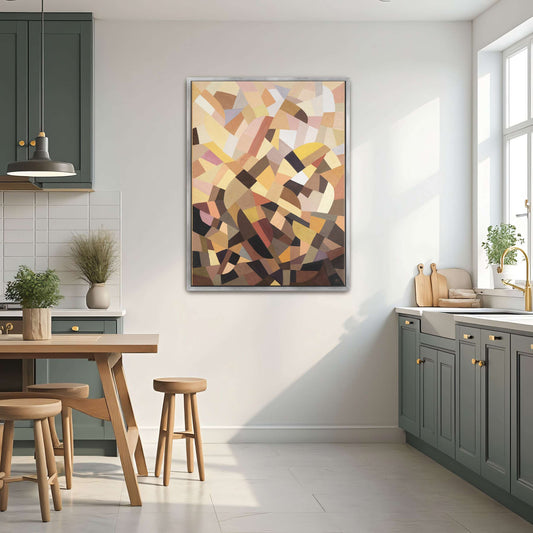
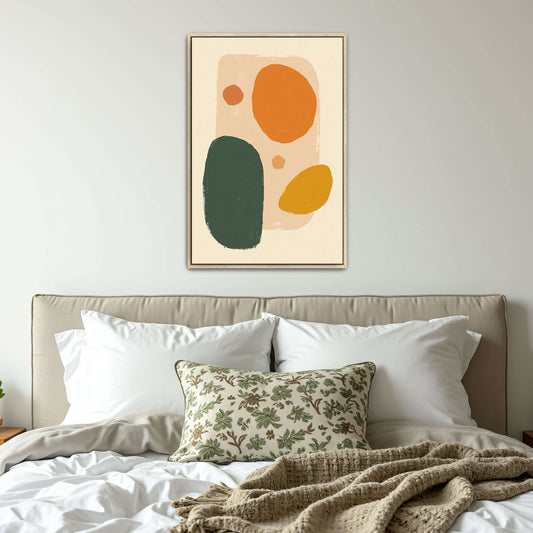
Geometric wall art uses shapes you can name: squares, circles, diamonds, stripes and hexagons. It gives a room order and rhythm. This collection mixes old ornament and quilt patterns with early abstract painting. You can pair a pattern print with a modern one.
Ornament and quilt patterns
Sydney Vacher (1854–1935) was an English artist. In 1886 he published plates of fifteenth-century Italian ornament, copied from patterns in Italian paintings. The plates show gold scrolls, stars and fleurs-de-lis on red, blue and teal grounds.
The Honeycomb Quilt by Elizabeth Van Horne Clarkson (1771–1852) dates from about 1830. Its honeycomb pattern repeats small six-sided patches across the whole quilt.
Geometric abstraction
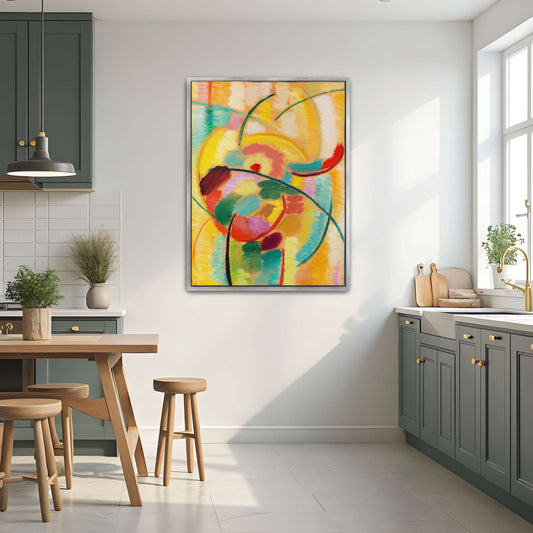
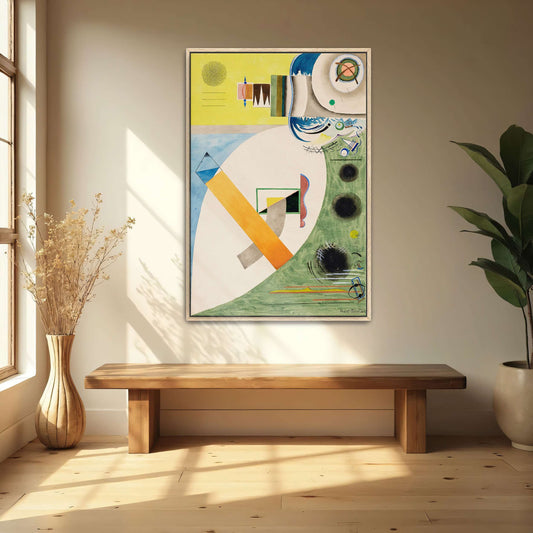
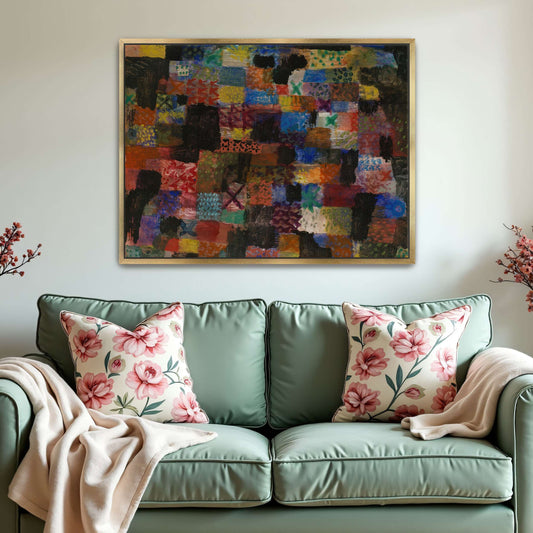
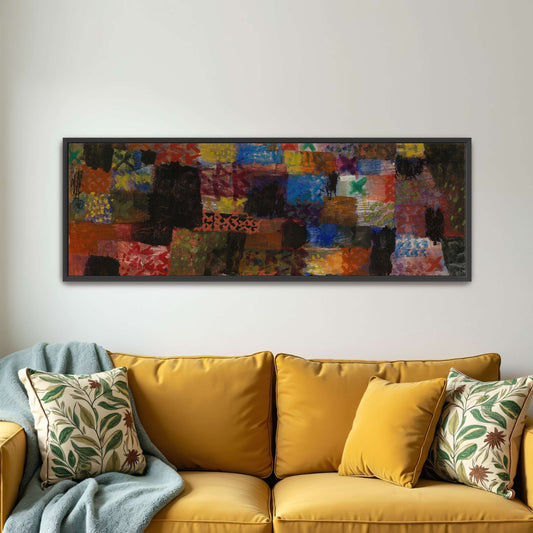
In the 1910s painters began to build whole pictures from geometric forms. Kandinsky's color studies of 1913 set squares, rings and diamonds side by side. In the 1920s Paul Klee painted grids of small colored squares.
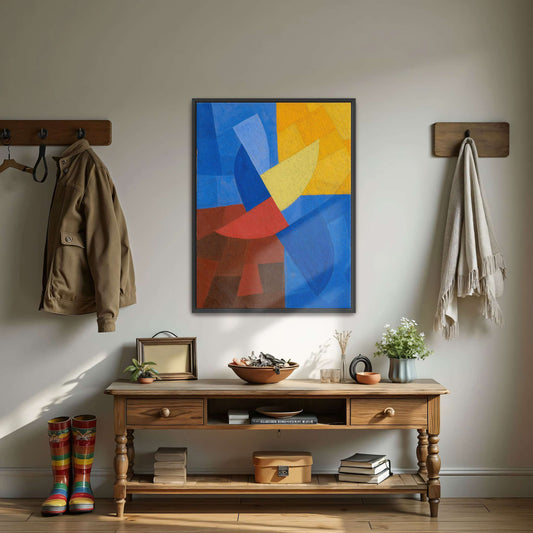
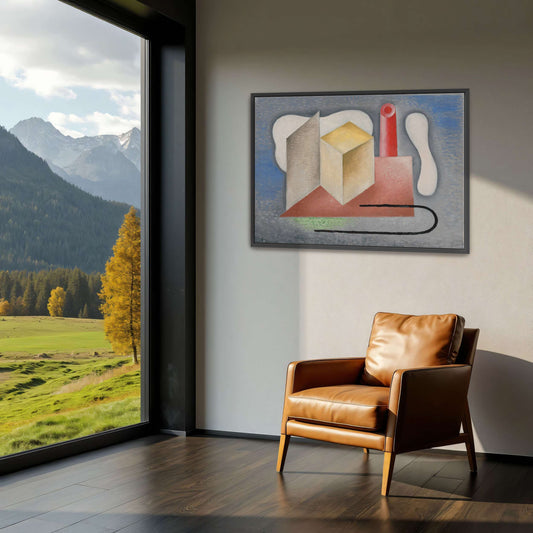
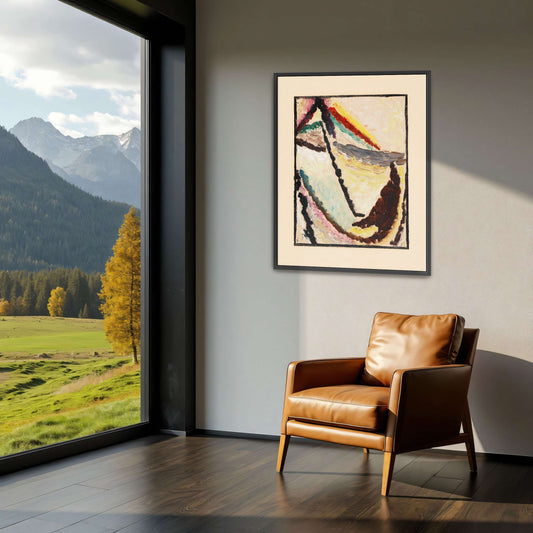
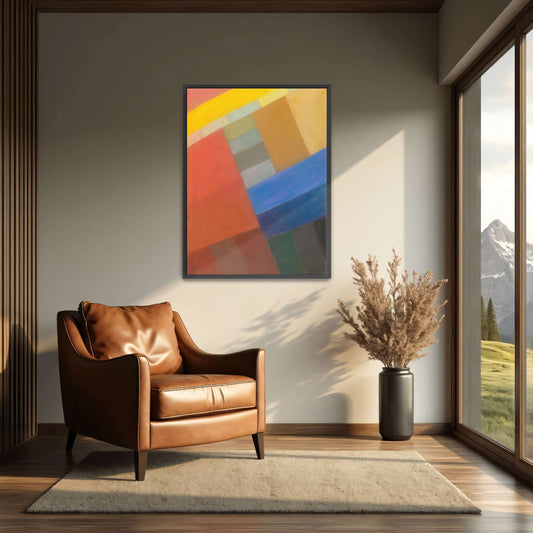
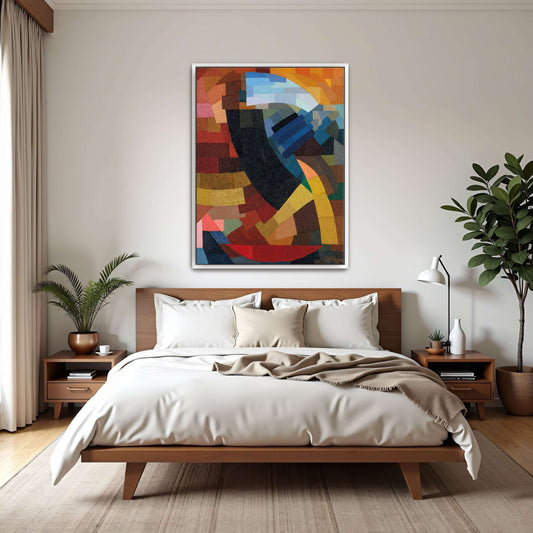
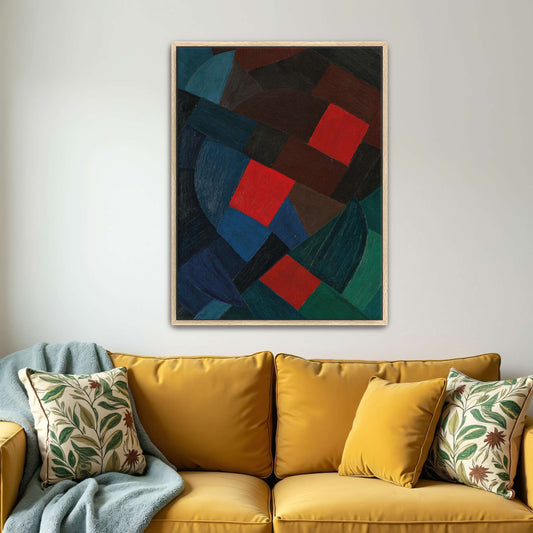
Otto Freundlich (1878–1943) fitted fields of color together like mosaic. Rudolf Bauer (1889–1953) floated circles and bars on open grounds. Alexej von Jawlensky reduced the human face to a few arcs and lines in his Abstract Heads. Adolf Hölzel designed stained glass in bold blocks of color.
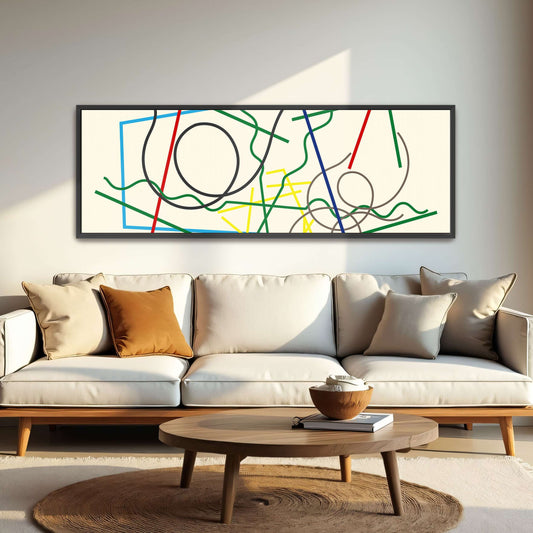
Myriam Thyes, a Swiss artist born in 1963, adds line works from 2014. Their straight and wavy lines give the collection a current look.
Works to start with
- Sydney Vacher, Fifteenth century Italian ornament, plate 7 (1886)
- Elizabeth Van Horne Clarkson, Honeycomb Quilt (ca. 1830)
- Wassily Kandinsky, Farbstudie mit Rauten (1913)
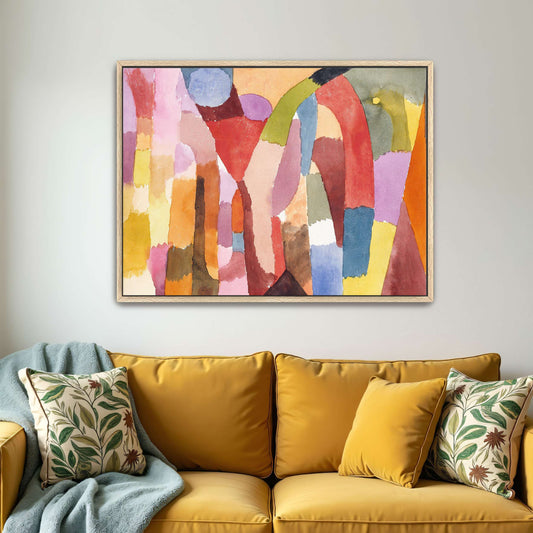
- Paul Klee, May Picture (1925)
- Otto Freundlich, Komposition (1930)
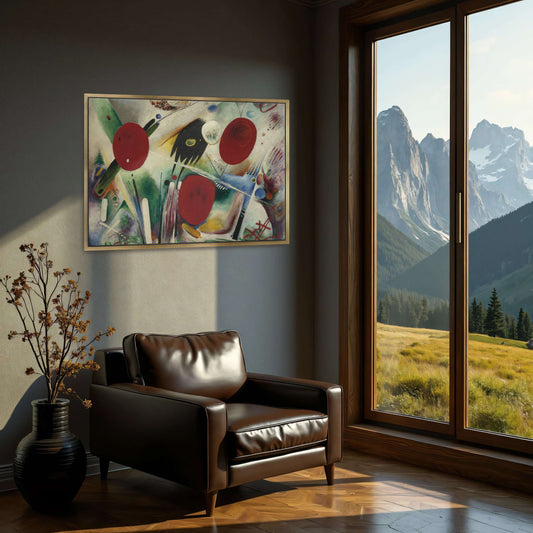
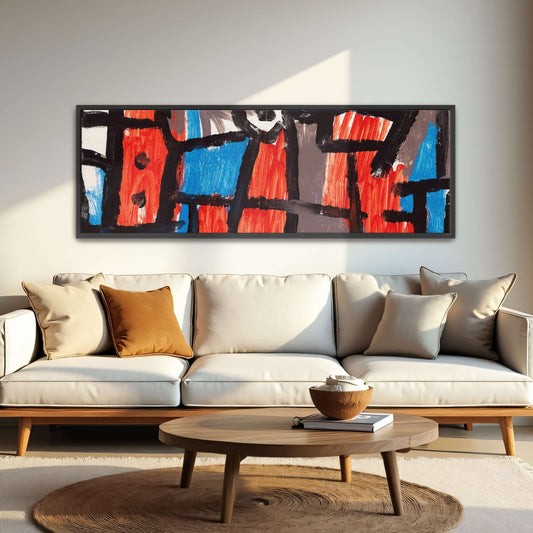
- Rudolf Bauer, Third Symphony in 3 Movements (1930–1934)
- Alexej von Jawlensky, Abstrakter Kopf (Konstruktiver Kopf) (1933)
- Myriam Thyes, Geometric and wavy lines (2014)
Sizes and frames
Standard prints run from 8 × 12 to 28 × 42 inches, or from 11 × 14 to 30 × 40 inches. The range depends on the shape of the work. Each product page shows the current price for every size and format. Frames come in black, white, gold, silver, walnut and oak. Panoramic prints come in 8 × 24 to 20 × 60 inches. Panoramic framed canvas comes in black, walnut or oak.
Using geometric art in a room
Geometric prints suit modern rooms, offices and children's rooms. Repeat a shape from the print elsewhere in the room, such as a round mirror or a striped rug. Hang a group in a strict grid with even gaps. Black or white frames keep the lines sharp. The ornament plates look best in gold or walnut.
Shapes also change the feel of a wall. Circles soften a room full of straight lines. Grids and squares suit a desk or office wall. Wavy lines add movement to a long hallway.
For more by the abstract painters, see Bauhaus & Early Abstract Art Prints, Paul Klee Prints and Wassily Kandinsky Prints. Jawlensky has his own page, Alexej von Jawlensky Prints. For looser abstract work, see Abstract Wall Art.